


Embryo Donation Treatment in Cyprus
Embryo donation is one of the assisted reproductive methods considered for individuals who are unable to conceive with their own eggs and sperm, or when using these cells is medically unsuitable. At Vita Altera IVF Center, the selection of egg and sperm donors, embryo development, uterine preparation, and embryo transfer are all planned on a personalized basis.
What is Embryo Donation?
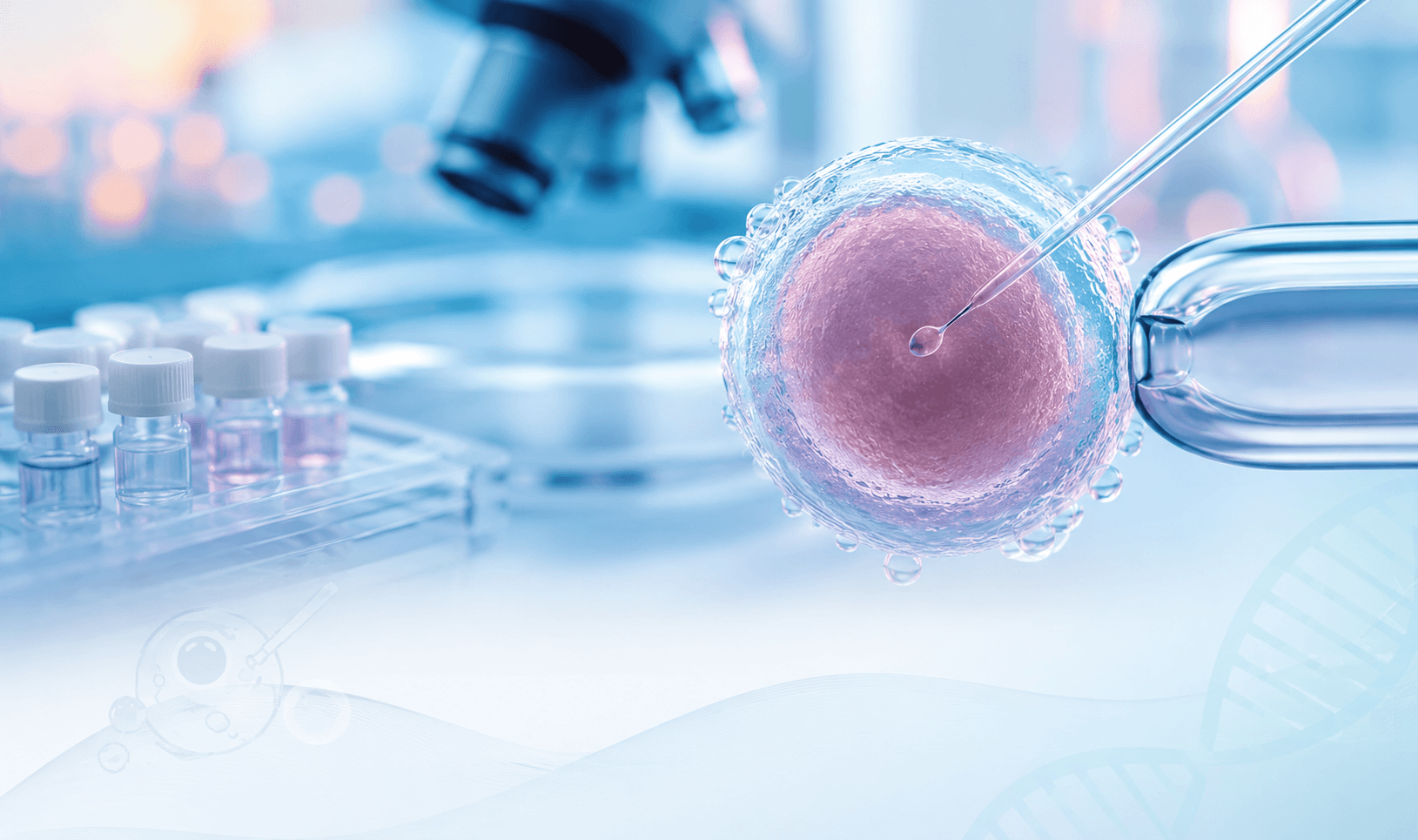
Embryo donation is the process where eggs and sperm obtained from suitable donors who have completed health screenings are fertilized in the embryology laboratory, and the resulting embryo is transferred to the uterus of the intended mother who will carry the pregnancy.
In this treatment, both the egg and sperm cells are obtained from donors. The eggs are fertilized with the sperm sample in the laboratory, and the development of the resulting embryos is monitored by specialist embryologists.The embryo deemed suitable for transfer is placed into the uterus of the mother-to-be, whose uterine lining has been prepared for pregnancy. The mother carries the pregnancy in her own womb and goes through the birth process herself.Embryo donation may also be referred to in some sources as double donation, donor embryo treatment, or embryo adoption.Who is Embryo Donation Suitable For?
Embryo donation may be considered upon doctor evaluation in cases where both egg and sperm cells are unusable or medically unsuitable.
- Couples with severely diminished ovarian reserve and no usable sperm available
- Couples with premature menopause or ovarian failure accompanied by severe male factor infertility
- Cases where usable eggs cannot be obtained from the intended mother and usable sperm cannot be obtained from the intended father
- Couples with significant quality issues in both egg and sperm cells
- Those who cannot obtain transferable embryos with their own eggs and sperm
- Those experiencing repeated fertilization failure or embryo development arrest
- Those who have had multiple unsuccessful IVF attempts
- Couples with a high risk of transmitting serious genetic diseases from both the maternal and paternal sides
- Individuals whose egg and sperm production has been damaged after chemotherapy or radiotherapy
- Patients for whom the use of donor eggs and donor sperm is deemed medically appropriate
Embryo Donation Treatment in Cyprus
Embryo donation treatment in Cyprus is a planned process consisting of medical evaluation, matching with egg and sperm donors, uterine preparation, embryo creation, and embryo transfer.
At Vita Altera IVF Center, the intended mother’s health status regarding pregnancy is evaluated before starting treatment. Uterine structure, uterine lining, previous pregnancy and treatment history, and current test results are reviewed.Egg and sperm donors are selected from candidates who have completed their health assessments. During matching, medical criteria are prioritized, while blood type and physical characteristics may also be considered.The feasibility of the treatment, required documents, and treatment schedule are evaluated based on the patient’s medical condition and current health regulations.Online Preliminary Consultation
Your medical history, previous IVF treatments, and current test results are reviewed by our doctors.Double Donor Matching
Egg and sperm donors are determined based on medical suitability and personal matching criteria.Patient Coordinator Support
The process, from tests to embryo transfer and the pregnancy result, is followed by your personal patient coordinator.How Are Donors Selected in Embryo Donation?
In embryo donation treatment, the health and reproductive characteristics of both the egg donor and the sperm donor are evaluated separately. The first stage of donor selection is always medical suitability.
General health assessment
The donors’ personal medical histories, medications used, and known significant diseases are evaluated.Family medical history
Information regarding serious or hereditary diseases in the family is included in the evaluation process.Reproductive health assessment
The egg donor’s ovarian reserve and the sperm donor’s sperm count, motility, and morphology are assessed.Infectious disease screenings
Donors undergo necessary infectious disease tests according to current medical protocols.Genetic risk assessment
Genetic carrier screening, considered necessary based on personal and family medical history, may be added to the evaluation process.Laboratory suitability
The suitability of egg and sperm cells for laboratory procedures is evaluated by the embryology team.Which characteristics are considered in donor matching?
After ensuring medical suitability, some physical and biological characteristics may be assessed to achieve the best possible match for the intended mother and, if applicable, her partner.- Blood type and Rh factor
- Skin tone
- Eye color
- Hair color and texture
- Height and body build
- Ethnic and physical features
How Is the Embryo Created?
After donor matching is completed, the egg and sperm cells are processed for fertilization in the Vita Altera embryology laboratory.
Preparation of the egg donor
The egg donor’s ovaries are stimulated in a controlled manner to promote the development of multiple eggs. Follicle development is monitored via ultrasound and necessary blood tests.Egg retrieval
Eggs that have reached appropriate development are collected through an egg retrieval procedure and evaluated for maturity in the embryology laboratory.Preparation of the sperm sample
The sample from the matched sperm donor is prepared according to laboratory procedures, and usable sperm cells are selected.Fertilization process
The eggs are fertilized with suitable sperm cells. Depending on the treatment plan, the ICSI method, where sperm is injected directly into the egg, may be used.Monitoring embryo development
The development of embryos formed after fertilization is followed by specialist embryologists. The embryo suitable for transfer is determined based on developmental signs.Which Tests Are Performed Before Embryo Donation?
The tests requested from the intended mother may vary based on her age, medical history, previous pregnancies, and treatment outcomes.
Basic evaluations
- Gynecological examination and ultrasound
- Assessment of the uterus and uterine lining
- Required hormone and blood tests
- Infectious disease screenings
- Thyroid and blood sugar assessments
- General health and pregnancy suitability evaluation
Additional possible evaluations
- Hysterosalpingography (HSG)
- Hysteroscopy
- Cervical screenings
- Breast health assessment
- Cardiology or internal medicine consultation
- Additional specialist opinions based on age and health status
How Does the Embryo Donation Treatment Process Proceed?
The treatment process consists of planned and sequential stages, from the initial consultation to the pregnancy test.
Initial consultation and evaluation
The intended mother’s medical history, previous pregnancies, IVF treatments, and current test results are reviewed. Required additional evaluations are determined.Egg and sperm donor matching
Egg and sperm donors who meet the medical and physical matching criteria are selected from donors who have completed their health checks.Preparing the uterus for pregnancy
The intended mother’s uterine lining is prepared for embryo transfer with medications determined by the doctor. Endometrial development is monitored via ultrasound.Obtaining donor eggs
The egg donor’s ovaries are stimulated in a controlled manner, and eggs with appropriate development are collected.Fertilization of the eggs
The collected mature eggs are fertilized in the embryology laboratory with the sample from the matched sperm donor.Monitoring embryo development
The development rate, cellular structure, and laboratory findings of the resulting embryos are monitored by specialist embryologists.Embryo transfer
The embryo found suitable for development is transferred into the intended mother’s uterus using a thin catheter. The procedure is usually brief and does not require anesthesia for most patients.Pregnancy test and follow-up
The date for the pregnancy test after the embryo transfer is determined. If the test is positive, follow-up tests and a pregnancy ultrasound are scheduled.How Long Does Embryo Donation Treatment Take?
The duration of treatment may vary depending on the completion of necessary tests, donor matching, the intended mother’s uterine preparation, and the embryo program used.
Uterine preparation is usually planned according to the intended mother’s menstrual cycle. The start time of medications and the development of the uterine lining are monitored with regular check-ups.When donor matching and necessary tests are completed beforehand, the dates for arrival in Cyprus, check-ups, and embryo transfer can be planned more smoothly.Can Fresh or Frozen Embryos Be Used?
In embryo donation treatment, the transfer can be performed using fresh or frozen embryos, depending on the treatment plan.
Fresh embryo transfer
The embryo created using eggs and sperm from donors is transferred to the intended mother during the same treatment cycle when its development is suitable.- Donor and recipient programs are coordinated
- Uterine preparation is carried out simultaneously with embryo development
- The embryo is transferred in the same treatment cycle
Frozen embryo transfer
Embryos of suitable quality can be frozen and stored, and transferred in a later treatment cycle once the intended mother’s uterus is ready.- The transfer date can be planned more flexibly
- Uterine preparation can be done in a separate cycle
- The embryo is thawed and assessed before transfer
The decision regarding the use of fresh or frozen embryos is made after evaluating the embryo’s development, the condition of the uterine lining, and the characteristics of the treatment protocol.
Factors Affecting Success in Embryo Donation
The outcome of embryo donation treatment does not depend on a single factor. Donor cell characteristics, embryo development, uterine structure, and laboratory conditions should all be evaluated together.
Egg donor age
The age of the egg donor and egg quality are important factors influencing embryo development.Egg quality
Obtaining mature, healthy, and fertilizable eggs supports embryo development.Sperm characteristics
Sperm count, motility, morphology, and suitability for laboratory procedures are assessed.Embryo development
The embryo’s developmental rate and laboratory findings after fertilization are crucial for the transfer decision.Uterine internal structure
The uterine cavity and lining must be suitable for the embryo to implant.Intended mother’s health
General health, hormonal disorders, and uterine issues can affect the pregnancy process.Transfer technique
Performing the embryo transfer at the right time and with precision is an important part of the treatment process.Laboratory conditions
Laboratory technology, quality standards, and the experience of the embryology team support embryo development.Regular medication use
Using the supportive medications as recommended during uterine preparation and after transfer is important.Genetic Connection in Embryo Donation
Before deciding on embryo donation, it is important to correctly and clearly understand the genetic aspect of the treatment.
Since the embryo is created from donor eggs and donor sperm, the genetic characteristics of the embryo come from the egg and sperm donors.The intended mother carrying the pregnancy does not provide the egg cell for the embryo; however, the pregnancy develops in her uterus. The mother’s health, nutrition, uterine environment, and pregnancy follow-up are important for the baby’s development.Embryo Donation Prices
Embryo donation prices in Cyprus may vary depending on the scope of the treatment program, the donor process, and the required laboratory procedures.
Main factors that can affect the total treatment cost include:- Scope of the egg donor program
- Selection of the sperm donor and sperm sample
- Donor matching process
- Medications used
- Egg retrieval procedure
- ICSI and laboratory procedures
- Embryo culture and transfer procedure
- Need for embryo freezing and storage
- Required additional tests and evaluations
- Need for genetic testing
Detailed information about the current treatment scope and fees will be shared by our patient coordinators after reviewing your medical history and current test results.
Safety, Ethical Principles, and Confidentiality
During the embryo donation process, importance is placed on protecting the health and identity information of the intended mother, her partner (if any), and the donors.At Vita Altera IVF Center, donor evaluation, matching, laboratory work, embryo transfer, and follow-up stages are conducted in line with medical ethical principles and patient confidentiality rules.Donors are not accepted into the treatment program without completing the necessary health checks. Security procedures are implemented in the laboratory for the identification and tracking of eggs, sperm, and embryos.Why Vita Altera IVF Center?
At Vita Altera, embryo donation treatment is conducted with a personalized and coordinated program, from the first consultation to the pregnancy test.
- Personalized treatment planning
- Experienced obstetricians and gynecologists
- Experienced embryology team
- Advanced embryology laboratory
- Detailed egg donor evaluation
- Safe sperm donor selection
- Personalized double donor matching
- Regular monitoring of embryo development
- Personal patient coordinator support
- Multilingual consultancy service
- Confidentiality-focused process management
- Online preliminary consultation opportunity
- Regular pre- and post-treatment follow-up