
Online Preliminary Consultation
Your AMH, hormone results, ultrasound reports, and medical history can be reviewed by our doctors before you arrive in Cyprus. 02
VITA ALTERA IVF · TREATMENT GUIDE
Explore treatment options, procedures and individual assessments.
Egg freezing is a fertility preservation procedure that involves collecting a woman's current egg cells and storing them using the vitrification method for future family planning.
At the Vita Altera IVF Center, the egg freezing process in Cyprus is individually planned based on the person's age, ovarian reserve, medical history, future plans, and potential medical risks.

VITA ALTERA IVF 01
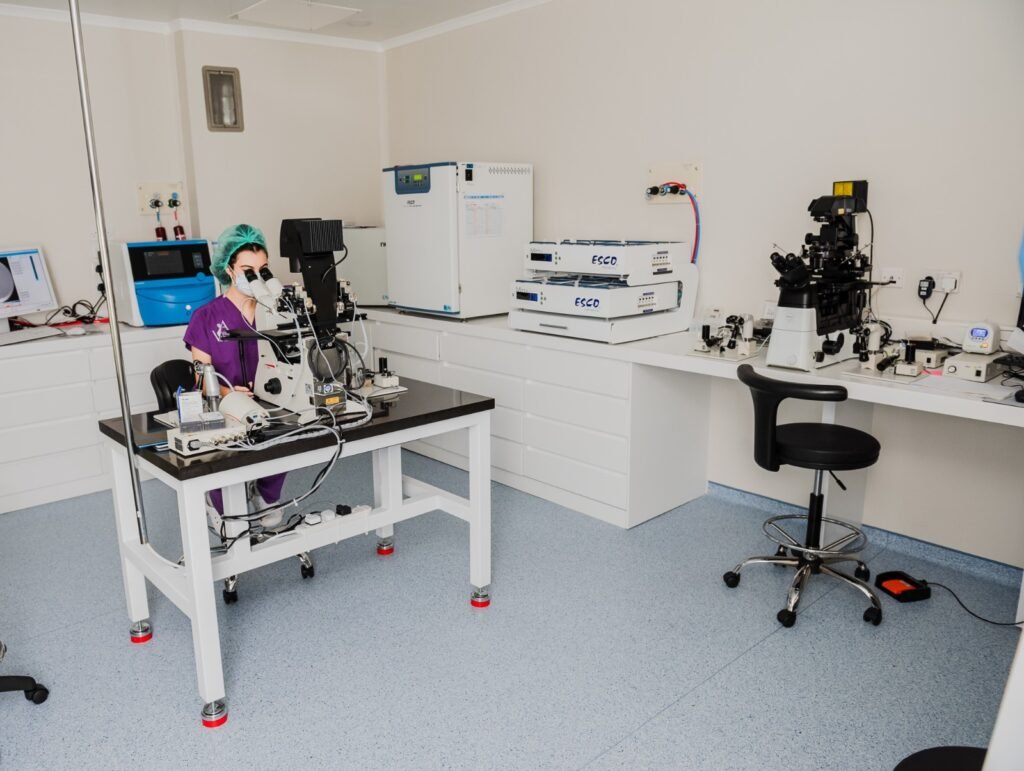
Egg freezing is the process of extracting mature egg cells from the ovaries and freezing them in a laboratory setting for future use, without prior fertilization.
During the treatment, personalized hormone medications are used to encourage the ovaries to develop multiple eggs within the same menstrual cycle. The developing eggs are then collected through an ultrasound-guided egg retrieval procedure. The collected eggs are evaluated for maturity in the embryology laboratory. Mature eggs suitable for freezing are preserved using vitrification, a rapid freezing technique. No sperm is used during egg freezing, and the eggs are not fertilized. When the individual decides to use these eggs in the future, they are thawed, fertilized with suitable sperm cells—often using the microinjection method—and the resulting embryo is transferred to the uterus. Does egg freezing completely stop biological time?Frozen eggs retain the biological characteristics corresponding to the age at which they were collected. However, the procedure does not halt the person's natural aging process, the gradual decline in ovarian reserve, or future general health changes.
VITA ALTERA IVF 02
The egg freezing procedure in Cyprus involves initial doctor evaluation, ovarian reserve testing, controlled ovarian stimulation, ultrasound monitoring, egg retrieval, and vitrification.
At the Vita Altera IVF Center, before starting treatment, factors such as the individual's age, menstrual regularity, ovarian reserve, previous surgeries, current medications, and health conditions affecting fertility are assessed. For patients coming from Turkey or other countries, the initial consultation can be conducted online. Existing hormone test results and ultrasound reports can be reviewed before arriving in Cyprus, allowing for the preparation of necessary tests and a tentative treatment plan. The medication start date, check-up days, egg retrieval timing, and stay schedule in Cyprus are personally planned based on how the ovaries respond to treatment. 01
Your AMH, hormone results, ultrasound reports, and medical history can be reviewed by our doctors before you arrive in Cyprus. 02
The type and dosage of medication are determined based on age, ovarian reserve, body composition, and previous treatment responses. 03
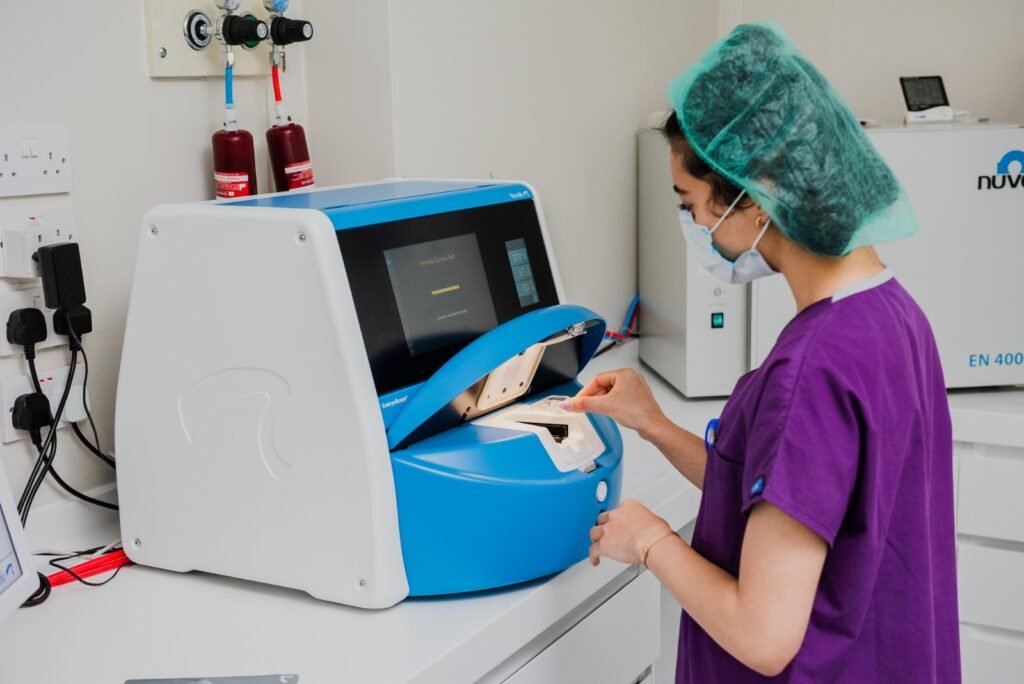
Collected eggs are assessed for maturity and stored following safety and identification procedures.
VITA ALTERA IVF 03
Egg freezing can be considered for women who wish to delay childbearing or before medical treatments that may affect their fertility potential.
Can everyone with low AMH freeze their eggs?Low AMH does not necessarily mean egg freezing is impossible; however, it may indicate that the number of eggs obtainable could be limited. Age, antral follicle count, menstrual regularity, and previous ovarian responses should be evaluated together.
VITA ALTERA IVF 04
Egg freezing can be performed for reasons related to the individual's future family planning or before a medical condition that threatens fertility.
This involves women storing their eggs at an earlier age to use later, due to factors like career, education, relationship status, or personal circumstances.
This is performed before treatments such as chemotherapy, radiotherapy, ovarian surgery, or other therapies that may reduce ovarian reserve.
Timing is crucial before cancer treatmentIt is important for patients planning chemotherapy, radiotherapy, or other treatments that may affect the ovaries to be referred to a fertility specialist as early as possible. The method to be applied is determined based on the type of disease and the start time of the primary treatment.
VITA ALTERA IVF 05
There is no single ideal age for egg freezing that applies to everyone. Generally, eggs frozen at a younger age tend to have a higher potential for future use.
As age advances, ovarian reserve may decline, and the likelihood of chromosomal abnormalities in eggs can increase. Therefore, the decision to freeze eggs should be based not only on the age at which childbearing is desired but also on the age at which the eggs are frozen. A good ovarian reserve does not necessarily mean egg quality is high. AMH and antral follicle count primarily help predict the ovarian response to medication and the number of eggs that might be obtained. Egg freezing can still be medically evaluated at an older age; however, realistic counseling about the likely number of eggs and future pregnancy chances is essential. Not wanting children today does not mean delaying evaluationIf childbearing plans are postponed for many years, early information about ovarian reserve and age-related fertility changes can facilitate more informed decision-making.
VITA ALTERA IVF 06
The egg retrieval procedure focuses on the eggs within the follicles that have begun to develop in that particular cycle. The process does not mean that all future eggs are being used at once.
Each menstrual cycle, a group of follicles begins to develop, and most are naturally lost. Ovarian stimulation medications help more of these follicles reach maturity. Egg freezing does not stop the age-related natural decline in reserve. After the procedure, the ovaries continue their biological processes. Does egg freezing delay menopause?No. Freezing eggs does not alter the age of menopause and does not halt the hormonal aging of the ovaries. The frozen eggs simply represent a separate reproductive option for future use.
VITA ALTERA IVF 07
Pre-treatment assessments are conducted to predict the ovaries' response to stimulation and to ensure the procedure is planned safely.
What does the AMH test indicate?AMH is a helpful indicator providing information about the current pool of follicles in the ovaries. It can help estimate the number of eggs that might be obtained during treatment, but it does not, by itself, indicate egg quality or guarantee future pregnancy.
VITA ALTERA IVF 08
The egg freezing process consists of sequential medical and laboratory stages, from the initial doctor evaluation to the storage of eggs via vitrification.
1
The individual's medical history, age, menstrual pattern, future plans, ovarian reserve, and health conditions affecting fertility are assessed. 2
Medication type and starting dosage are determined based on AMH, ultrasound findings, body composition, and previous ovarian responses, if any. 3
Hormonal injections are used to encourage the development of multiple eggs within the same menstrual cycle. It is important to administer the medication at the specified times. 4
The ovaries' response to medication is tracked via ultrasound and necessary blood tests. Medication dosages may be adjusted based on the results. 5
When follicles reach adequate development, a trigger injection is administered to support the final maturation of the eggs. The egg retrieval time is determined based on this injection. 6
Eggs are collected from the follicles using a thin needle guided by ultrasound, usually under sedation or short-term anesthesia. 7
The collected eggs are examined in the embryology laboratory. Not every follicle yields an egg, and not all retrieved eggs may be mature. 8
Mature eggs suitable for freezing are subjected to vitrification, a rapid freezing method designed to minimize ice crystal formation within the cell. 9
Frozen eggs are matched with patient information and stored in specialized containers within liquid nitrogen tanks at very low temperatures. 10
Information regarding the number of eggs collected, the number of mature eggs, and the number of eggs successfully frozen and stored is shared with the patient after the procedure.
VITA ALTERA IVF 09
Vitrification is a modern freezing method that involves rapidly cooling the egg cell to a glass-like state, aiming to reduce the formation of damaging ice crystals within the cell.
Because the egg cell has a high water content and a delicate cellular structure, the freezing process requires significant laboratory expertise. Vitrification can support better post-thaw survival compared to older slow-freezing methods. Before vitrification, eggs are processed through special protective solutions and then stored at very low temperatures. Eggs intended for future use are thawed using controlled laboratory procedures. Does every frozen egg survive the thawing process?No. While modern vitrification techniques provide high post-thaw survival rates, it is not guaranteed that every egg will survive thawing, fertilize, or develop into an embryo.
VITA ALTERA IVF 10
The number of eggs needed for future childbearing is not the same for everyone. The individual's age, egg quality, desired number of future children, and post-thaw laboratory results all influence this requirement.
Not every collected egg is mature. Not every frozen egg survives thawing, not every surviving egg fertilizes, and not every fertilized egg develops into a transferable embryo. Eggs frozen at a younger age generally have a higher potential to become usable embryos in the future. As age increases, more mature eggs may be required to achieve the same goal. If the target number is not achieved in a single egg retrieval cycle, a second egg freezing cycle may be considered for some individuals whose health and ovarian reserve allow it. Does a specific number of eggs guarantee pregnancy?No. A certain number of eggs does not guarantee future pregnancy or live birth. During counseling, individual probabilities should be explained based on age and the number of mature eggs obtained.
VITA ALTERA IVF 11
The ovarian stimulation with medication and the completion of the egg retrieval process is typically planned over approximately two weeks, although this can vary depending on the individual's ovarian response.
Medication use generally lasts about 8–12 days. During this period, several ultrasound scans and, if necessary, blood tests are performed to evaluate follicle development. Egg retrieval is performed at a time determined by the doctor following the trigger injection. After the procedure, the patient is observed briefly and can usually be discharged the same day. While treatment can begin at the start of a menstrual period, different starting protocols may be considered in some medical situations to minimize time loss. How many days should I stay in Cyprus?The required length of stay in Cyprus depends on whether some monitoring can be done in the patient's home city and on how the ovaries respond to treatment. An estimated travel schedule is shared by the patient coordinator after the initial evaluation.
VITA ALTERA IVF 12
When an individual wishes to use their frozen eggs, suitability for pregnancy and uterine structure are first assessed. Then, an IVF program is prepared for thawing the eggs and creating embryos.
1
The individual's current age, uterine structure, general health, and ability to safely sustain a pregnancy are evaluated. 2
The sperm sample to be used for fertilizing the frozen eggs is determined based on the treatment plan and the individual's circumstances. 3
The eggs designated for use are thawed according to laboratory protocols and assessed for viability. 4
A suitable sperm cell is injected into the mature eggs that survived thawing, usually using the microinjection method. 5
Fertilized eggs that develop into embryos are monitored in the embryology laboratory for several days. 6
An embryo showing suitable development is transferred to the prepared uterus of the prospective mother. A pregnancy test and follow-up schedule are then organized.
VITA ALTERA IVF 13
Both methods aim to preserve future childbearing options, but they differ in the structure of the stored cell and the decision-making control involved.
Eggs are stored unfertilized. No sperm is needed during the procedure, and the decision on which sperm source to use for fertilization can be made later.
Collected eggs are fertilized with sperm, and the resulting suitable embryos are frozen. The embryo carries the genetic material of the egg and sperm providers.
Which method is more suitable?The choice between egg or embryo freezing should be based on the individual's relationship status, sperm source availability, future plans, medical conditions, and preference regarding decision-making on the stored material.
VITA ALTERA IVF 14
The future outcome of an egg freezing procedure is not solely dependent on the freezing technique. Many stages, from the age at which eggs are obtained to embryo transfer, influence the result.
The age at which eggs are collected is one of the most important factors for future embryo development and chromosomal characteristics.
Ovarian reserve can affect the number of eggs obtainable in a treatment cycle and whether additional cycles are needed.
Freezing a higher number of mature eggs may increase future options; however, it does not guarantee pregnancy.
Not all collected eggs are mature. The number of mature eggs suitable for freezing is a significant outcome of the treatment.
The preparation, freezing, and storage of eggs require careful laboratory protocols.
Some frozen eggs may not retain their viability or usability after the thawing process.
When eggs are used in the future, sperm characteristics can affect fertilization and embryo development.
Not all fertilized eggs may reach the stage of a transferable embryo.
Even if eggs were frozen at a young age, the uterine structure and general health of the person carrying the pregnancy in the future remain important. Does egg freezing guarantee future pregnancy?No. Egg freezing provides an additional reproductive option that can be used in the future; however, there is no guarantee that every egg will thaw, fertilize, develop into an embryo, or result in pregnancy.
VITA ALTERA IVF 15
Egg freezing is a treatment requiring regular medical monitoring. The medications, the egg retrieval procedure, and the laboratory stages have certain risks and limitations.
Sensitivity at the injection site, headaches, mood changes, abdominal bloating, and temporary discomfort may occur.
In some patients, ovaries may respond more intensely than expected to the medication. Appropriate dosage and regular monitoring help mitigate this risk.
Mild pain and spotting may occur after the procedure. Serious complications like bleeding, infection, or involvement of surrounding organs are rare.
Ovaries may show limited response to treatment, some follicles may not yield eggs, or the retrieved eggs may not be mature.
Not all frozen eggs may survive the thawing process in the future.
Having frozen eggs does not guarantee that a healthy embryo, pregnancy, or live birth will definitely occur in the future.
VITA ALTERA IVF 16
Eggs can be stored for extended periods under appropriate laboratory and cryostorage conditions. The biological age of the cell does not progress in the same way as the storage duration after freezing.
Administrative conditions regarding storage duration, renewal of consents, fees, and future decisions on the use or disposal of eggs are carried out in accordance with current regulations and the signed storage agreement. It is important to keep contact information up to date and to follow storage renewal notifications sent by the center. Does long-term storage age the eggs?The biological characteristics of the egg are largely related to its condition at the age it was frozen. Nevertheless, when eggs are used in the future, post-thaw viability, fertilization, and embryo development are assessed separately.
VITA ALTERA IVF 17
Egg freezing costs in Cyprus can vary depending on the ovarian stimulation program applied, the medications used, the scope of monitoring, and the storage duration.
Since each patient's age, ovarian reserve, and required medication dosage are different, an accurate assessment cannot be made solely based on a standard package price. Main factors influencing the total cost include:
What details should be asked when comparing prices?When comparing egg freezing costs, it should be assessed whether medications, anesthesia, the egg retrieval procedure, vitrification, and the initial storage period are included in the stated price. Future thawing, fertilization, and embryo transfer are separate procedures that may be billed separately. Current treatment scope and pricing information are shared in detail by our patient coordinators after evaluating your existing tests and ovarian reserve.
VITA ALTERA IVF 18
At Vita Altera, egg freezing is not just about collecting and storing eggs; it is approached as a holistic process involving correct timing, personalized ovarian stimulation, safe laboratory monitoring, and planning for future use.
Technology and high egg count are not success guaranteesVitrification and laboratory security systems can support the process. However, future outcomes depend on the age at which eggs were frozen, the number of mature eggs, post-thaw viability, sperm characteristics, embryo development, and the health status during the pregnancy period.
VITA ALTERA IVF 19
VITA ALTERA IVF 20
If you wish to preserve the option of having a child with your own eggs in the future, it can be evaluated whether egg freezing is suitable for you based on your age, ovarian reserve, and personal plans. Our patient coordinators will forward your existing tests to our doctors and assist you with online preliminary evaluation, personalized medication programs, travel schedules for Cyprus, and current egg freezing costs.

VITA ALTERA IVF · OUR TEAM
Tedavi seçenekleri, süreç ve Kıbrıs planlaması hakkında bize WhatsApp'tan yazabilirsiniz.