



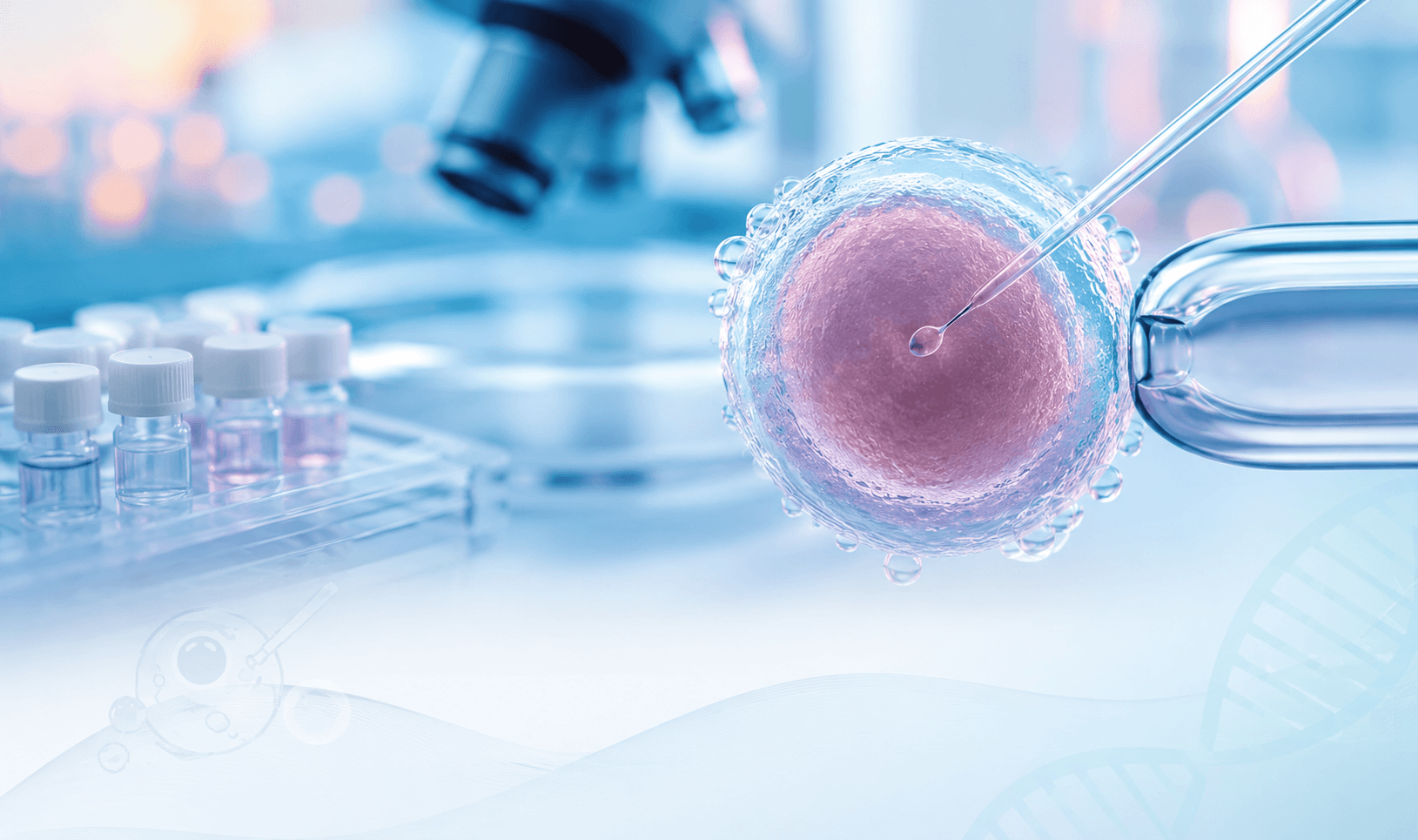
Egg Freezing Procedure in Cyprus
Egg freezing is a fertility preservation procedure that involves collecting a woman’s current egg cells and storing them using the vitrification method for future family planning. At the Vita Altera IVF Center, the egg freezing process in Cyprus is individually planned based on the person’s age, ovarian reserve, medical history, future plans, and potential medical risks.
What is Egg Freezing?
Egg freezing is the process of extracting mature egg cells from the ovaries and freezing them in a laboratory setting for future use, without prior fertilization.
During the treatment, personalized hormone medications are used to encourage the ovaries to develop multiple eggs within the same menstrual cycle. The developing eggs are then collected through an ultrasound-guided egg retrieval procedure.The collected eggs are evaluated for maturity in the embryology laboratory. Mature eggs suitable for freezing are preserved using vitrification, a rapid freezing technique.No sperm is used during egg freezing, and the eggs are not fertilized. When the individual decides to use these eggs in the future, they are thawed, fertilized with suitable sperm cells—often using the microinjection method—and the resulting embryo is transferred to the uterus.Egg Freezing Procedure in Cyprus
The egg freezing procedure in Cyprus involves initial doctor evaluation, ovarian reserve testing, controlled ovarian stimulation, ultrasound monitoring, egg retrieval, and vitrification.
At the Vita Altera IVF Center, before starting treatment, factors such as the individual’s age, menstrual regularity, ovarian reserve, previous surgeries, current medications, and health conditions affecting fertility are assessed.For patients coming from Turkey or other countries, the initial consultation can be conducted online. Existing hormone test results and ultrasound reports can be reviewed before arriving in Cyprus, allowing for the preparation of necessary tests and a tentative treatment plan.The medication start date, check-up days, egg retrieval timing, and stay schedule in Cyprus are personally planned based on how the ovaries respond to treatment.Online Preliminary Consultation
Your AMH, hormone results, ultrasound reports, and medical history can be reviewed by our doctors before you arrive in Cyprus.Personalized Stimulation Plan
The type and dosage of medication are determined based on age, ovarian reserve, body composition, and previous treatment responses.Safe Laboratory Monitoring
Collected eggs are assessed for maturity and stored following safety and identification procedures.Who is Egg Freezing Suitable For?
Egg freezing can be considered for women who wish to delay childbearing or before medical treatments that may affect their fertility potential.
- Women who wish to postpone childbearing to a later age
- Women who have not yet found a suitable partner or suitable parenting conditions
- Patients about to undergo chemotherapy or radiotherapy
- Women scheduled for surgery that poses a risk of ovarian damage
- Patients undergoing surgery for ovarian cysts or endometriosis
- Women with a family history of early menopause or premature ovarian insufficiency
- Individuals at risk of faster-than-expected decline in ovarian reserve
- Those with genetic or autoimmune diseases that put ovarian function at risk
- Patients who will be using long-term treatments that may affect reproductive potential
- Women who wish to preserve the option of pregnancy with their own eggs in the future
Planned and Medically Indicated Egg Freezing
Egg freezing can be performed for reasons related to the individual’s future family planning or before a medical condition that threatens fertility.
Planned Egg Freezing
This involves women storing their eggs at an earlier age to use later, due to factors like career, education, relationship status, or personal circumstances.- Aims to preserve future reproductive options
- Does not require sperm or a partner for the procedure
- The decision is based on the individual’s own future plans
- Eggs frozen at a younger age generally have higher potential
- Does not guarantee future pregnancy
Fertility Preservation for Medical Reasons
This is performed before treatments such as chemotherapy, radiotherapy, ovarian surgery, or other therapies that may reduce ovarian reserve.- Requires coordination with oncology or relevant specialists
- The time remaining before starting the primary treatment is assessed
- Ovarian stimulation protocols can be adjusted based on the disease
- In some cases, treatment can be initiated without waiting for a menstrual period
- Avoiding unnecessary delays in medical treatment is crucial
What is the Best Age for Egg Freezing?
There is no single ideal age for egg freezing that applies to everyone. Generally, eggs frozen at a younger age tend to have a higher potential for future use.
As age advances, ovarian reserve may decline, and the likelihood of chromosomal abnormalities in eggs can increase. Therefore, the decision to freeze eggs should be based not only on the age at which childbearing is desired but also on the age at which the eggs are frozen.A good ovarian reserve does not necessarily mean egg quality is high. AMH and antral follicle count primarily help predict the ovarian response to medication and the number of eggs that might be obtained.Egg freezing can still be medically evaluated at an older age; however, realistic counseling about the likely number of eggs and future pregnancy chances is essential.Does Egg Freezing Reduce Ovarian Reserve?
The egg retrieval procedure focuses on the eggs within the follicles that have begun to develop in that particular cycle. The process does not mean that all future eggs are being used at once.
Each menstrual cycle, a group of follicles begins to develop, and most are naturally lost. Ovarian stimulation medications help more of these follicles reach maturity.Egg freezing does not stop the age-related natural decline in reserve. After the procedure, the ovaries continue their biological processes.Which Tests are Performed Before Egg Freezing?
Pre-treatment assessments are conducted to predict the ovaries’ response to stimulation and to ensure the procedure is planned safely.
Reproductive Health Evaluations
- Gynecological examination and ultrasound
- Antral follicle count
- AMH test
- Relevant hormone tests
- Assessment of menstrual regularity
- Review of previous ovarian surgeries
- Evaluation of endometriosis or ovarian cysts
- Review of previous treatment outcomes
General Health Evaluations
- Complete blood count and necessary biochemistry tests
- Infectious disease screenings
- Thyroid function tests
- Blood sugar and metabolic assessments
- Review of current medications
- Assessment of suitability for anesthesia
- Cardiology or internal medicine consultations if needed
- Specialist evaluation based on specific medical conditions
How is the Egg Freezing Procedure in Cyprus Performed?
The egg freezing process consists of sequential medical and laboratory stages, from the initial doctor evaluation to the storage of eggs via vitrification.
Initial Consultation and Evaluation
The individual’s medical history, age, menstrual pattern, future plans, ovarian reserve, and health conditions affecting fertility are assessed.Preparation of Personalized Treatment Protocol
Medication type and starting dosage are determined based on AMH, ultrasound findings, body composition, and previous ovarian responses, if any.Ovarian Stimulation with Medication
Hormonal injections are used to encourage the development of multiple eggs within the same menstrual cycle. It is important to administer the medication at the specified times.Monitoring Follicle Development
The ovaries’ response to medication is tracked via ultrasound and necessary blood tests. Medication dosages may be adjusted based on the results.Trigger Injection for Egg Maturation
When follicles reach adequate development, a trigger injection is administered to support the final maturation of the eggs. The egg retrieval time is determined based on this injection.Egg Retrieval Procedure
Eggs are collected from the follicles using a thin needle guided by ultrasound, usually under sedation or short-term anesthesia.Laboratory Evaluation of Eggs
The collected eggs are examined in the embryology laboratory. Not every follicle yields an egg, and not all retrieved eggs may be mature.Vitrification of Mature Eggs
Mature eggs suitable for freezing are subjected to vitrification, a rapid freezing method designed to minimize ice crystal formation within the cell.Identification and Storage
Frozen eggs are matched with patient information and stored in specialized containers within liquid nitrogen tanks at very low temperatures.Sharing the Results
Information regarding the number of eggs collected, the number of mature eggs, and the number of eggs successfully frozen and stored is shared with the patient after the procedure.What is Vitrification?
Vitrification is a modern freezing method that involves rapidly cooling the egg cell to a glass-like state, aiming to reduce the formation of damaging ice crystals within the cell.
Because the egg cell has a high water content and a delicate cellular structure, the freezing process requires significant laboratory expertise. Vitrification can support better post-thaw survival compared to older slow-freezing methods.Before vitrification, eggs are processed through special protective solutions and then stored at very low temperatures. Eggs intended for future use are thawed using controlled laboratory procedures.How Many Eggs Should Be Frozen?
The number of eggs needed for future childbearing is not the same for everyone. The individual’s age, egg quality, desired number of future children, and post-thaw laboratory results all influence this requirement.
Not every collected egg is mature. Not every frozen egg survives thawing, not every surviving egg fertilizes, and not every fertilized egg develops into a transferable embryo.Eggs frozen at a younger age generally have a higher potential to become usable embryos in the future. As age increases, more mature eggs may be required to achieve the same goal.If the target number is not achieved in a single egg retrieval cycle, a second egg freezing cycle may be considered for some individuals whose health and ovarian reserve allow it.How Long Does the Egg Freezing Procedure Take?
The ovarian stimulation with medication and the completion of the egg retrieval process is typically planned over approximately two weeks, although this can vary depending on the individual’s ovarian response.
Medication use generally lasts about 8–12 days. During this period, several ultrasound scans and, if necessary, blood tests are performed to evaluate follicle development.Egg retrieval is performed at a time determined by the doctor following the trigger injection. After the procedure, the patient is observed briefly and can usually be discharged the same day.While treatment can begin at the start of a menstrual period, different starting protocols may be considered in some medical situations to minimize time loss.How are Frozen Eggs Used in the Future?
When an individual wishes to use their frozen eggs, suitability for pregnancy and uterine structure are first assessed. Then, an IVF program is prepared for thawing the eggs and creating embryos.
Pre-pregnancy Health Evaluation
The individual’s current age, uterine structure, general health, and ability to safely sustain a pregnancy are evaluated.Determining the Sperm Source
The sperm sample to be used for fertilizing the frozen eggs is determined based on the treatment plan and the individual’s circumstances.Thawing the Eggs
The eggs designated for use are thawed according to laboratory protocols and assessed for viability.Microinjection Procedure
A suitable sperm cell is injected into the mature eggs that survived thawing, usually using the microinjection method.Fertilization and Embryo Monitoring
Fertilized eggs that develop into embryos are monitored in the embryology laboratory for several days.Embryo Transfer
An embryo showing suitable development is transferred to the prepared uterus of the prospective mother. A pregnancy test and follow-up schedule are then organized.Difference Between Egg Freezing and Embryo Freezing
Both methods aim to preserve future childbearing options, but they differ in the structure of the stored cell and the decision-making control involved.
Egg Freezing
Eggs are stored unfertilized. No sperm is needed during the procedure, and the decision on which sperm source to use for fertilization can be made later.- Unfertilized egg cells are stored
- Does not require sperm or a partner
- Eggs remain under the individual’s control
- They need to be thawed and fertilized in the future
- Not every egg may develop into an embryo
Embryo Freezing
Collected eggs are fertilized with sperm, and the resulting suitable embryos are frozen. The embryo carries the genetic material of the egg and sperm providers.- Fertilized embryos that have begun developing are stored
- Requires a sperm source during the procedure
- Future use of the embryo may depend on mutual consent
- Fertilization and early development information is known beforehand
- The embryo is thawed and evaluated before transfer
Factors Affecting Egg Freezing Success
The future outcome of an egg freezing procedure is not solely dependent on the freezing technique. Many stages, from the age at which eggs are obtained to embryo transfer, influence the result.
Age at which eggs are frozen
The age at which eggs are collected is one of the most important factors for future embryo development and chromosomal characteristics.Ovarian Reserve
Ovarian reserve can affect the number of eggs obtainable in a treatment cycle and whether additional cycles are needed.Number of Eggs Collected
Freezing a higher number of mature eggs may increase future options; however, it does not guarantee pregnancy.Egg Maturity
Not all collected eggs are mature. The number of mature eggs suitable for freezing is a significant outcome of the treatment.Vitrification Process
The preparation, freezing, and storage of eggs require careful laboratory protocols.Post-thaw Viability
Some frozen eggs may not retain their viability or usability after the thawing process.Sperm Characteristics
When eggs are used in the future, sperm characteristics can affect fertilization and embryo development.Embryo Development
Not all fertilized eggs may reach the stage of a transferable embryo.Uterus and General Health
Even if eggs were frozen at a young age, the uterine structure and general health of the person carrying the pregnancy in the future remain important.Risks and Limitations of the Egg Freezing Procedure
Egg freezing is a treatment requiring regular medical monitoring. The medications, the egg retrieval procedure, and the laboratory stages have certain risks and limitations.
Side effects of medications
Sensitivity at the injection site, headaches, mood changes, abdominal bloating, and temporary discomfort may occur.Ovarian Hyperstimulation
In some patients, ovaries may respond more intensely than expected to the medication. Appropriate dosage and regular monitoring help mitigate this risk.Egg Retrieval Risks
Mild pain and spotting may occur after the procedure. Serious complications like bleeding, infection, or involvement of surrounding organs are rare.Inability to Obtain Sufficient Eggs
Ovaries may show limited response to treatment, some follicles may not yield eggs, or the retrieved eggs may not be mature.Post-thaw Loss
Not all frozen eggs may survive the thawing process in the future.No Guarantee of Pregnancy
Having frozen eggs does not guarantee that a healthy embryo, pregnancy, or live birth will definitely occur in the future.How Long Can Eggs Be Stored?
Eggs can be stored for extended periods under appropriate laboratory and cryostorage conditions. The biological age of the cell does not progress in the same way as the storage duration after freezing.
Administrative conditions regarding storage duration, renewal of consents, fees, and future decisions on the use or disposal of eggs are carried out in accordance with current regulations and the signed storage agreement.It is important to keep contact information up to date and to follow storage renewal notifications sent by the center.Egg Freezing Costs in Cyprus
Egg freezing costs in Cyprus can vary depending on the ovarian stimulation program applied, the medications used, the scope of monitoring, and the storage duration.
Since each patient’s age, ovarian reserve, and required medication dosage are different, an accurate assessment cannot be made solely based on a standard package price.Main factors influencing the total cost include:- Initial doctor evaluation
- AMH, hormone, and blood tests
- Ultrasound monitoring
- Type and dosage of ovarian stimulation medications
- Trigger injection for egg maturation
- Egg retrieval procedure
- Sedation or anesthesia
- Embryology laboratory evaluation
- Egg vitrification procedure
- Initial storage period
- Annual storage renewal fees
- Additional specialist evaluations if needed
- Need for an additional egg freezing cycle
- Travel and accommodation preferences
Why Vita Altera IVF Center?
At Vita Altera, egg freezing is not just about collecting and storing eggs; it is approached as a holistic process involving correct timing, personalized ovarian stimulation, safe laboratory monitoring, and planning for future use.
- Personalized fertility preservation planning
- Experienced obstetricians and gynecologists
- Experienced embryology and laboratory team
- Detailed ovarian reserve assessment
- Personalized medication and monitoring program
- Modern egg vitrification methods
- Advanced embryology laboratory
- Chip ID sample matching and security system
- Secure egg identification
- Online preliminary consultation option
- Personal patient coordinator support
- Multilingual patient counseling
- Travel and accommodation planning assistance
- Regular follow-up before and after treatment
- Counseling for the future thawing and usage process