


Egg Donation Treatment in Cyprus
Egg donation is an assisted reproductive technique that offers women with a low chance of conceiving with their own eggs, or for whom using their own eggs is medically unsuitable, the opportunity to have a child. At the Vita Altera IVF Center, the treatment process is planned individually, tailored to each patient’s health status and needs.
What is Egg Donation?
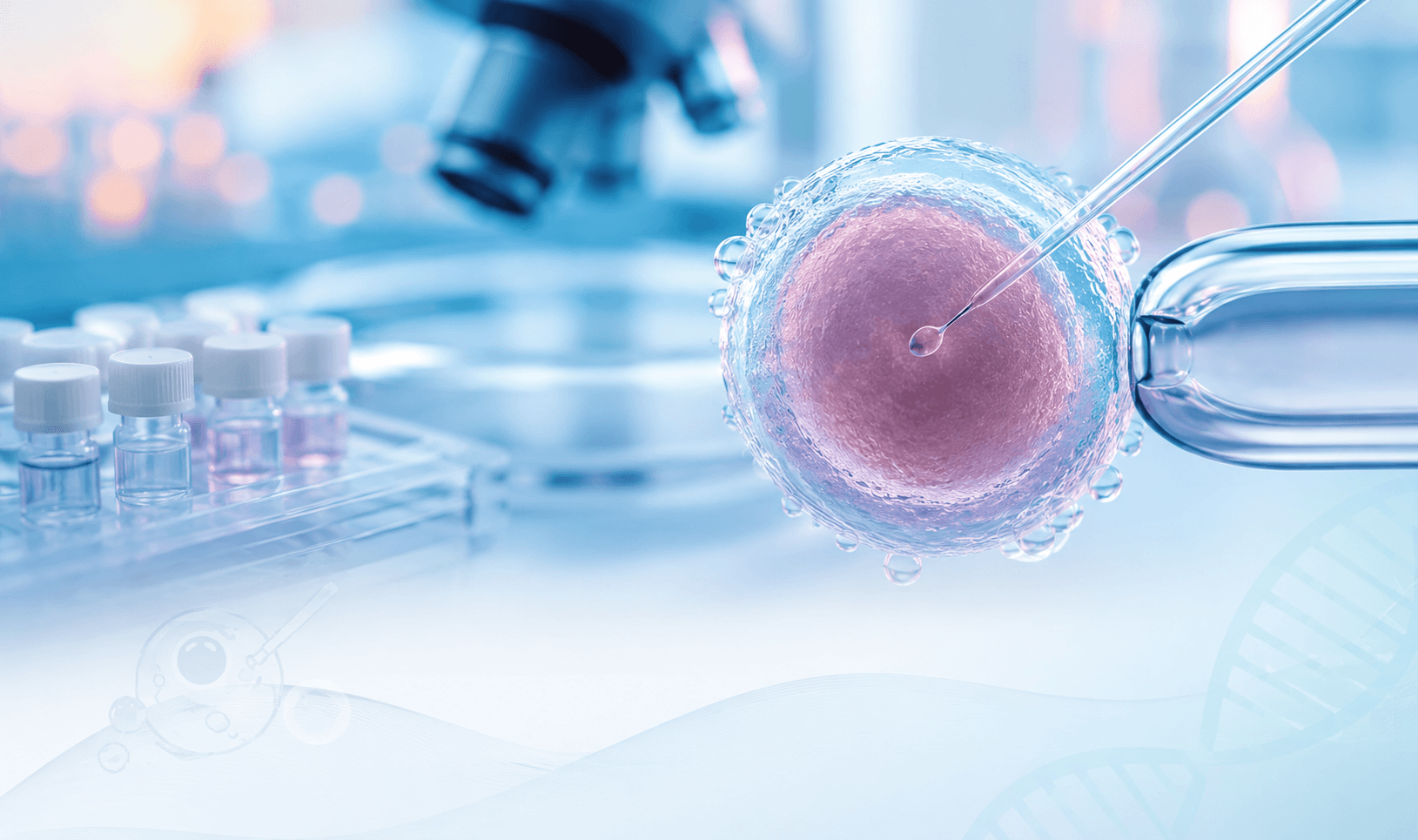
Egg donation is based on the principle of fertilizing eggs obtained from a suitable donor who has passed health screenings in an IVF laboratory, and transferring the resulting embryo to the uterus of the intended mother who will carry the pregnancy.
During the treatment, the eggs obtained from the donor are fertilized in the embryology laboratory with the sperm sample taken from the intended father. Following fertilization, the developing embryos are monitored by expert embryologists, and the embryo found suitable for transfer is placed into the intended mother’s uterus.Sometimes referred to colloquially as egg transfer or egg donation, this method differs from classic IVF treatment in terms of the source of the egg. The intended mother carries the pregnancy in her own uterus and goes through the childbirth process herself.Who is Egg Donation Suitable For?
Egg donation treatment may be recommended following a doctor’s evaluation for women who have a low probability of obtaining healthy embryos with their own eggs.
- Women with severely diminished ovarian reserve
- Those experiencing early menopause or premature ovarian insufficiency
- Women whose egg quality has decreased due to advanced age
- Those who have had their ovaries removed surgically
- Those whose ovaries were damaged after chemotherapy or radiotherapy
- Those who were unable to obtain transferable embryos with their own eggs
- Those who have experienced recurrent IVF failure
- Women who carry a risk of transmitting a genetic disease
- Those who do not respond adequately to ovarian stimulation medications
- Those with congenitally underdeveloped ovarian function
Egg Donation Treatment in Cyprus
Egg donation treatment in Cyprus is one of the assisted reproduction options considered by patients coming from different countries. Before the treatment, the patient’s medical suitability, required tests, and personal treatment program are determined in detail.
At the Vita Altera IVF Center, the stages of evaluation, matching, laboratory work, and embryo transfer are conducted within the framework of current health regulations, medical ethical principles, and patient confidentiality rules.Our patients coming from Turkey or another country can have their initial consultations online. Test results and treatment records from previous attempts can be reviewed by our doctors, and a preliminary treatment plan can be created before the patient arrives in Cyprus.Online Preliminary Consultation
Your medical history and previous treatment results are evaluated by our doctor.Personalized Treatment Schedule
Medication start dates, check-ups, and arrival dates in Cyprus are planned personally for you.Patient Coordinator Support
Coordinator support is provided throughout the process, from before treatment until the pregnancy test.How is an Egg Donor Selected?
Egg donor selection is one of the most important stages of treatment. Donor candidates are evaluated for general health, reproductive health, infectious diseases, and potential genetic risks before being accepted into the program.
General health assessment
The donor candidate’s personal medical history, family history of diseases, and suitability for treatment are examined.Ovarian reserve
Ovarian reserve is checked through hormone tests and ultrasound evaluations.Infectious disease screenings
Donor candidates undergo necessary infectious disease tests in accordance with current medical protocols.Genetic risk assessment
Personal and family medical history is examined; additional genetic tests may be performed if deemed necessary.Which characteristics are considered in donor matching?
To achieve the most suitable match with the intended mother, some physical characteristics may be taken into account alongside medical suitability.- Blood type and Rh factor
- Skin color
- Hair color and texture
- Eye color
- Height and body type
- Ethnic and physical characteristics
Which Tests Are Performed Before Egg Donation?
The tests requested before treatment may vary depending on the patient’s age, medical history, and previous treatments.
Assessments for the Intended Mother
- Gynecological examination and ultrasound
- Evaluation of the uterine lining
- Required hormone and blood tests
- Infectious disease screenings
- Hysterosalpingography (HSG) if necessary
- Hysteroscopy if necessary
- Thyroid and blood sugar evaluations
- Additional health checks depending on age
Assessments for the Intended Father
- Semen analysis
- Infectious disease screenings
- Sperm DNA fragmentation test if necessary
- Genetic evaluations if deemed necessary
- Urology or andrology consultation
- Review of previous treatment results
Tests recently performed at another health institution can be reviewed by our doctors. If the validity period or scope of the tests is insufficient, some examinations may be requested to be repeated.
How Does the Egg Donation Treatment Process Progress?
The egg donation process consists of planned, sequential stages, from the initial medical evaluation to the pregnancy test.
Initial Consultation and Evaluation
The medical history of the intended parents, previous IVF attempts, and current test results are evaluated. Necessary additional tests are determined, and a personalized treatment plan is created.Donor Matching
A match is made from among donors who have completed their health checks, based on the couple’s medical and physical characteristics. Health criteria are prioritized in the matching process.Preparing the Uterus for Embryo Transfer
The intended mother’s uterine lining is prepared for embryo transfer using medications prescribed by the doctor. The thickness and structure of the endometrium are monitored via ultrasound.Stimulation of the Donor’s Ovaries
Controlled ovarian stimulation is applied to the donor to enable the development of multiple eggs. Follicle development is monitored with regular check-ups.Egg Retrieval
Eggs that have reached appropriate development are collected from the donor and taken to the embryology laboratory. The eggs are evaluated for maturity and quality.Fertilization and Embryo Development
The eggs are fertilized with the sperm sample taken from the intended father. Microinjection (ICSI) may be applied if deemed necessary. The development of the resulting embryos is monitored by expert embryologists.Embryo Transfer
The embryo found to have suitable development is transferred into the intended mother’s uterus using a thin catheter. The procedure is usually brief and does not require anesthesia for most patients.Pregnancy Test and Follow-up
The date for the pregnancy test following the embryo transfer is determined. If the result is positive, follow-up tests and a pregnancy ultrasound are scheduled.How Long Does Egg Donation Treatment Take?
The duration of treatment can vary depending on the intended mother’s menstrual regularity, uterine preparation, donor program, and the treatment protocol used.
When the initial consultation and required tests are completed beforehand, the treatment schedule can be established more smoothly. Medication start dates, check-up dates, arrival time in Cyprus, and the embryo transfer day are shared step by step by the patient coordinator.Are Fresh or Frozen Eggs Used?
In egg donation treatment, either fresh or frozen donor eggs may be used. The appropriate method is determined according to the patient’s needs and the treatment plan.
Fresh Donor Eggs
The donor’s ovarian preparation and the intended mother’s uterine preparation are coordinated within a specific schedule. The collected eggs are fertilized within the same treatment cycle.Frozen Donor Eggs
Previously frozen and stored suitable eggs are thawed according to the treatment plan and taken for fertilization.Both methods have their own potential advantages and limitations. The method used is determined considering the egg number, laboratory evaluation, treatment schedule, and the couple’s medical characteristics.
Factors Affecting Success in Egg Donation
Success in egg donation treatment is not dependent on a single factor. The donor, sperm, embryo, uterine structure, and laboratory conditions must be evaluated together.
Donor Age
The donor’s age and ovarian characteristics are important factors influencing egg quality.Egg Quality
Obtaining mature eggs suitable for fertilization can affect embryo development.Sperm Characteristics
Sperm count, motility, morphology, and, if necessary, DNA integrity are evaluated.Embryo Development
The embryo’s developmental rate and laboratory assessments post-fertilization are important.Uterine Environment
The suitability of the uterine lining for embryo implantation is a crucial stage of treatment.Laboratory Conditions
The technology, quality standards of the embryology laboratory, and the team’s experience support the process.Egg Donation Costs
Egg donation costs in Cyprus can vary depending on the scope of the treatment program applied and the need for additional procedures.
The main factors that can affect the total treatment cost include:- Scope of the donor program
- Medications used
- Required laboratory procedures
- Additional tests and evaluations
- Need for embryo freezing
- Additional genetic analyses
- Validity status of previous tests
- Personalized treatment plan
Current treatment scope and pricing information will be shared in detail by our patient coordinators after your medical history and existing tests have been reviewed.
Safety, Ethical Principles, and Confidentiality
In egg donation treatment, importance is placed on protecting the health information and personal data of both the donor and the individuals receiving treatment.At the Vita Altera IVF Center, the stages of donor evaluation, matching, egg retrieval, laboratory work, and embryo transfer are conducted in line with medical ethics, patient privacy, and current health regulations.Why Vita Altera IVF Center?
At Vita Altera, we plan the entire process together, not just on the day of embryo transfer, but from the first consultation through to post-treatment follow-ups.
- Personalized treatment planning
- Experienced obstetricians and gynecologists
- Experienced embryology team
- Advanced embryology laboratory
- Comprehensive donor evaluation process
- Personal patient coordinator support
- Multilingual patient counseling
- Privacy-focused process management
- Online preliminary consultation option
- Regular follow-ups before and after treatment