



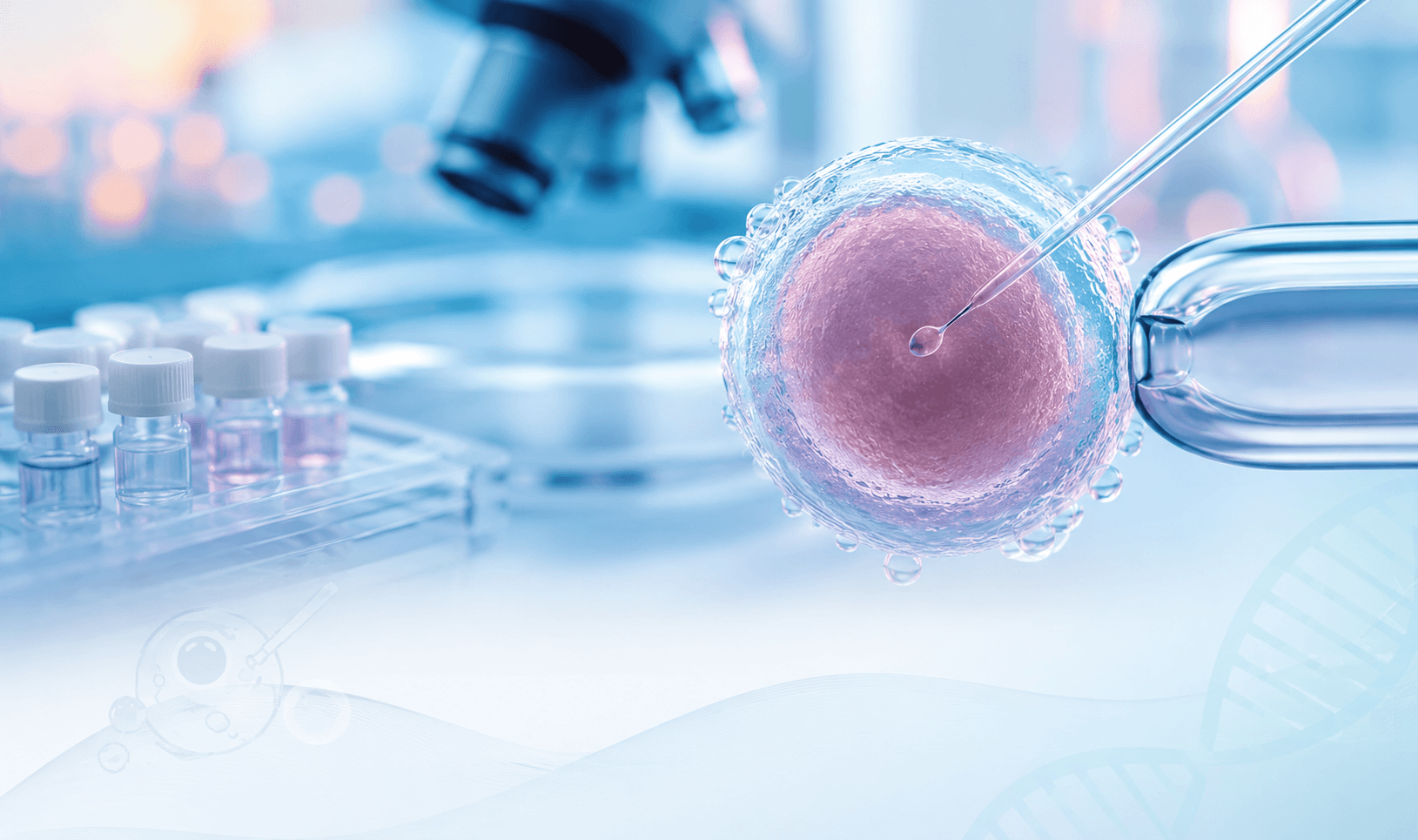
Embryo Freezing Procedure in Cyprus
Embryo freezing is the process of storing suitable embryos, developed through IVF or ICSI treatment, for future use using the vitrification method. At the Vita Altera IVF Center, the embryo freezing process in Cyprus is personalized based on the embryo’s developmental characteristics, the prospective mother’s health status, uterine lining suitability, genetic testing plans, and future transfer goals.
What is Embryo Freezing?
Embryo freezing is the process of storing suitable embryos, created by fertilizing egg and sperm cells in a laboratory environment, at very low temperatures for future use.
During IVF treatment, eggs collected from the prospective mother are fertilized with sperm cells using either classical IVF or ICSI (microinjection). The resulting embryos are monitored in the embryology laboratory for several days.Embryos that are not transferred and are found to have developmental characteristics suitable for storage can be frozen using the vitrification method, with the couple’s consent and in accordance with current regulations.These frozen embryos can be used in the future without the need for a new ovarian stimulation and egg retrieval procedure. After the prospective mother’s uterus is prepared for transfer, the embryo is thawed and, if it retains its viability, transferred to the uterus.Embryo Freezing in Cyprus
The embryo freezing process in Cyprus involves the evaluation of embryos created during IVF, selection of suitable embryos, freezing via vitrification, secure identification, and storage in specialized tanks.
At the Vita Altera IVF Center, the embryo’s day of development, cell structure, blastocyst characteristics, and laboratory assessments are reviewed by expert embryologists.During storage, patient information, embryo development day, freezing date, egg and sperm source, and other laboratory data are meticulously recorded.Patients coming from Turkey or other countries for treatment can have their initial consultation online. Previous IVF and embryology reports can be reviewed to provide a preliminary assessment regarding embryo freezing, storage, or a frozen embryo transfer program.Embryological Assessment
Embryos are evaluated based on their developmental stage and laboratory characteristics to determine those suitable for freezing.Vitrification Process
Suitable embryos are stored for future use using the vitrification method, which is based on rapid cooling.Secure Recording and Storage
Embryos are matched with patient information and recorded according to cryostorage safety procedures.Why Are Embryos Frozen?
Embryos may be frozen to enable future use of suitable embryos not transferred during IVF treatment, or if the fresh transfer is medically postponed.
- Availability of usable extra embryos after fresh transfer.
- High risk of ovarian hyperstimulation syndrome (OHSS) in the prospective mother.
- Uterine lining not suitable for fresh transfer.
- Hormone levels not optimal for transfer timing.
- Planned preimplantation genetic testing (PGT) on embryos.
- Need to wait for genetic test results.
- Presence of polyps, fibroids, or adhesions requiring treatment within the uterus.
- Development of infection or other health issues around the transfer period.
- Implementation of an embryo banking program.
- Desire to store embryos for a future sibling plan.
- Postponement of treatment timeline for personal or medical reasons.
- Fertility preservation before undergoing treatment that may affect fertility.
Who is Embryo Freezing Suitable For?
Embryo freezing can be considered for patients who have suitable embryos remaining after IVF treatment or for those whose embryo transfer needs to be postponed.
- Couples who produce multiple suitable embryos following IVF treatment.
- Those planning to have another child in the future after the first transfer.
- Patients for whom fresh embryo transfer is not medically suitable.
- Women whose transfer is postponed due to OHSS risk.
- Patients whose uterine lining has not developed adequately.
- Couples planning to have PGT performed on their embryos.
- Patients banking embryos over multiple IVF cycles.
- Couples wishing to store embryos before chemotherapy or radiotherapy.
- Patients whose transfer is postponed before uterine surgery or hysteroscopy.
- Couples planning a frozen embryo transfer at a later date.
What is a Freeze-All Treatment?
Freeze-all is an approach where all suitable embryos obtained during an IVF treatment are frozen, and no fresh embryo transfer is performed in the same cycle.
After the embryos are stored, the prospective mother’s ovaries and hormone levels recover from the treatment effects. The uterine lining can be prepared for transfer in a subsequent cycle, either naturally or with medication.The freeze-all approach is not a routine method required for every IVF patient. The decision should be made considering the patient’s ovarian response, OHSS risk, hormone results, uterine lining condition, and embryo development.High OHSS Risk
For patients whose ovaries over-respond to medication, postponing fresh transfer can support the safety of the prospective mother.Unsuitable Uterine Preparation
If the uterine lining is not optimal for transfer, embryos can be stored, and the uterus can be prepared in a subsequent cycle.Genetic Testing Planning
If embryo biopsy is required and PGT results are pending, embryos can be frozen and transferred later.Personalized Timing
The transfer date can be planned more flexibly according to the patient’s health status and personal treatment circumstances.What is Embryo Vitrification?
Vitrification is a modern cryopreservation method based on ultra-rapid cooling of embryos to minimize the formation of ice crystals that could cause damage within the cells.
Prior to vitrification, embryos are exposed to specialized protective solutions. These solutions help protect the embryo cells during the cooling and warming process.The embryo is then placed on a special carrier system and stored at very low temperatures. Under suitable conditions, the embryo’s biological activities cease during storage.When the embryo is to be used, it is warmed in a controlled laboratory procedure, and the protective substances are gradually removed. The embryo’s viability and cellular integrity are assessed by the embryologist.How is the Embryo Freezing Process Performed in Cyprus?
The embryo freezing process consists of sequential IVF and embryology stages, from obtaining the egg and sperm cells to storing the embryos in the laboratory.
Initial Assessment and Treatment Planning
The couple’s medical history, ovarian reserve, sperm characteristics, previous treatments, and future plans for the embryos are evaluated.Controlled Ovarian Stimulation
Personalized hormone medications are used to stimulate the development of multiple eggs in the prospective mother’s ovaries.Monitoring Follicle Development
The ovarian response to medication is monitored via ultrasound and necessary blood tests. Medication dosages may be adjusted based on the results.Egg Retrieval
Eggs that have reached appropriate maturity are collected using an ultrasound-guided egg retrieval procedure.Preparation of the Sperm Sample
The sperm sample to be used in the treatment is prepared in the laboratory, and viable sperm cells for the fertilization method are evaluated.Fertilization of Eggs
Mature eggs are fertilized using either classical IVF or ICSI (microinjection), depending on sperm characteristics and the treatment plan.Fertilization Check
Eggs are checked for signs of fertilization. Eggs showing normal fertilization are monitored for embryo development.Monitoring Embryo Development
Embryos are monitored in the laboratory for several days. Cell division and blastocyst development are evaluated by embryologists.Selection of Embryos for Freezing
Embryos with developmental characteristics suitable for freezing are identified, and a storage plan is made with the couple’s consent.Vitrification
Embryos are passed through special protective solutions, placed on suitable carriers, and vitrified using a rapid cooling method.Identification and Security Check
Patient information, embryo development day, freezing date, and laboratory records are verified according to safety procedures.Storage in Cryostorage Tanks
Vitrified embryos are stored in specialized cryostorage tanks at very low temperatures for future use.At Which Developmental Stage Can Embryos Be Frozen?
Embryos can be frozen either at an early cleavage stage or at the blastocyst stage, based on laboratory evaluation. The most suitable day for freezing may vary for each patient.
Day 3 Embryo
On the third day after fertilization, the embryo is generally at the cleavage stage. Freezing on day 3 may be considered based on the number of embryos, treatment plan, and laboratory findings.- Embryo is at an early cleavage stage.
- May be considered for patients with a limited number of embryos.
- Cell count and division pattern are assessed.
- Development is re-evaluated after future thawing.
Blastocyst Embryo
The advanced developmental stage typically reached by the embryo on day 5 or 6 is called the blastocyst stage. Blastocysts showing good development can be stored via vitrification.- Embryo is at a more advanced developmental stage.
- More information about developmental capacity can be obtained.
- Can support single embryo transfer planning.
- Not all embryos will reach the blastocyst stage.
The Difference Between Embryo and Egg Freezing
Both methods aim to preserve future reproductive options, but they differ significantly regarding the fertilization status and genetic source of the stored cells.
Embryo Freezing
The egg cell is fertilized with a sperm cell, and the resulting suitable embryo is stored. The embryo carries the genetic material from both the egg and sperm sources.- Fertilized and developing embryos are stored.
- A sperm source is required during treatment.
- The result of fertilization is known beforehand.
- The embryo’s developmental characteristics can be assessed.
- Required consents for future use are evaluated.
Egg Freezing
Egg cells are stored without being fertilized by sperm. The individual can decide on the sperm source for future use at a later time.- Unfertilized egg cells are stored.
- Sperm is not required during the procedure.
- Fertilization and embryo development occur in the future.
- Not every thawed egg may develop into an embryo.
- May offer greater individual flexibility in reproductive planning.
Embryo Freezing After PGT
When preimplantation genetic testing (PGT) is planned, the embryo can be frozen after biopsy while waiting for the results.
PGT typically involves evaluating cell samples taken from suitable embryos that have reached the blastocyst stage, which are then assessed in a genetics laboratory.Following the biopsy, the embryo is stored via vitrification. Once the genetic test results are available, an embryo suitable for transfer can be used in a subsequent cycle after the uterus has been prepared.Genetic testing is not mandatory for every IVF patient or every embryo. The necessity for PGT should be assessed based on the couple’s genetic history, age, pregnancy losses, and treatment findings.What is Embryo Banking and Accumulation?
Embryo banking involves freezing suitable embryos obtained from multiple egg retrieval cycles to be evaluated together in the future.
This method may be considered, particularly for some patients who produce a limited number of eggs or embryos in a single treatment cycle.Embryos obtained from each cycle are recorded and frozen separately. Once the planned number is reached, the genetic testing or embryo transfer phase can proceed.Embryo banking is not a routine method proven to increase success for all patients with low ovarian reserve. Age, ovarian reserve, treatment cost, time, and the likelihood of obtaining viable embryos should be evaluated together.How Long Can Frozen Embryos Be Stored?
Embryos can be stored for extended periods under appropriate cryostorage conditions. Continued storage depends on renewing necessary consents and complying with current legal regulations.
During the storage period, it is important for the couple to keep their contact information up to date and to follow renewal notifications sent by the center.Issues such as storage duration, annual fees, future use of embryos, transfer to another center, or termination of storage are addressed according to signed documents and prevailing regulations.Extending the storage period does not advance the biological age of the embryo as it would inside the body. The age factor primarily relates to the age at which the egg was collected.How Are Frozen Embryos Used in the Future?
When embryos are intended for use, the prospective mother’s uterus is prepared for transfer, either by tracking natural ovulation or using hormone medications.
Health and Uterine Evaluation
The current health status, uterine structure, menstrual cycle pattern, and previous transfer outcomes are assessed.Choosing the Transfer Preparation Method
The appropriate transfer protocol is selected from options including natural, modified natural, or medicated cycles with estrogen and progesterone.Monitoring the Uterine Lining
Endometrial thickness and structure are monitored via ultrasound and, if necessary, hormone tests.Determining Transfer Timing
The timing is planned to synchronize the embryo’s developmental stage with ovulation timing or the duration of progesterone use.Thawing the Embryo
The embryo designated for transfer is thawed in a controlled laboratory setting and assessed for viability.Post-Thaw Laboratory Monitoring
The embryo’s cellular integrity and developmental capacity are examined. If needed, brief laboratory monitoring may occur before transfer.Embryo Transfer
A viable, suitable embryo is transferred to the prospective mother’s uterus using a thin catheter.Pregnancy Test and Follow-up
The date for the pregnancy test is scheduled along with supportive medications. In case of a positive result, ultrasound follow-up is planned.Factors Affecting Embryo Freezing Success
The future outcome of embryo freezing is not solely dependent on the vitrification method. Many factors, from embryo formation to post-transfer period, are mutually influential.
Age at Egg Retrieval
The age at which eggs were collected is a significant factor regarding the embryo’s chromosomal characteristics and developmental potential.Egg Quality
Obtaining mature and viable eggs is a fundamental step for embryo development.Sperm Characteristics
Sperm count, motility, morphology, and genetic integrity can influence fertilization and embryo development.Embryo Development Day
Whether the embryo is at an early cleavage or blastocyst stage can affect the freezing and thawing plan.Embryo Developmental Characteristics
Cell structure, division pattern, and blastocyst grading are considered when assessing embryo suitability for freezing.Vitrification Protocol
The preparation of the embryo in protective solutions, cooling, and storage require careful laboratory practices.Thawing Process
Controlled warming of the embryo and removal of protective substances are crucial for maintaining viability.Uterine Structure
Even if a viable embryo is obtained after thawing, the uterine cavity and lining must be suitable for transfer.Transfer Timing
Synchronization between the hormonal development of the uterine lining and the embryo’s developmental stage is important.Advantages of Embryo Freezing
Embryo freezing allows suitable embryos obtained from a single egg retrieval cycle to be used at different times.
May Reduce Need for Further Egg Retrievals
If suitable frozen embryos are available, subsequent transfers may not require new ovarian stimulation and egg retrieval.Flexible Transfer Timing
Transfer can be planned in a different menstrual cycle when the uterine lining and general health are optimal.Supports Safety in OHSS Risk
For patients with high ovarian response, fresh transfer can be postponed, and embryos can be stored.Allows Waiting for PGT Results
After embryo biopsy, embryos can be frozen until genetic test results are complete.Future Sibling Planning
Suitable embryos not transferred can be stored for potential use in a future pregnancy plan.Fertility Preservation
Embryos created before medical treatments that may affect fertility can be stored for future use.Risks and Limitations of Embryo Freezing
Although embryo freezing has been a laboratory practice for many years, there are biological, technical, and decision-related limitations at various stages.
No Embryos Suitable for Freezing
Not all collected eggs may fertilize, and not all fertilized eggs may reach a stage suitable for freezing.Loss of Viability After Thawing
A small percentage of frozen embryos may not retain viability or transferable characteristics after thawing.Failure to Achieve Pregnancy
Transferring a viable embryo after thawing does not guarantee implantation or pregnancy.Storage Decisions
Decisions regarding the future use, continued storage, or termination of embryo storage are significant and require informed choices.Requirement for Joint Consent
The conditions for use and storage of embryos may depend on the consents of the egg and sperm providers and the regulations in force.Annual Storage Costs
Ongoing storage and renewal fees apply for as long as the embryos are stored.Embryo Transport Process
Transferring embryos stored at another center to Vita Altera, or from Vita Altera to another center, is subject to specific medical, laboratory, and legal conditions.
Before transport, embryology reports, freezing method, embryo development day, storage records, and required consent documents are reviewed.Embryos are not transported under normal cargo conditions. Special transport tanks and authorized procedures suitable for cryological transport must be used.Whether inter-country or inter-center transport is possible depends on prevailing regulations, the receiving center’s policies, and the suitability of the documents.Embryo Freezing Costs in Cyprus
Embryo freezing costs in Cyprus can vary depending on the number of embryos, laboratory procedures applied, storage duration, and the future use plan for the embryos.
Embryo freezing is typically an additional laboratory and storage procedure performed following IVF or ICSI treatment.Key factors that may affect the total cost include:- Scope of IVF or ICSI treatment
- Duration of embryo culture in the laboratory
- Number of embryos to be frozen
- Development day of the embryos
- Vitrification procedure
- Duration of the initial storage period
- Annual embryo storage fees
- Need for PGT biopsy and genetic testing
- Embryo thawing procedure
- Frozen embryo transfer
- Transport of embryos from another center
- Pre-transfer uterine preparation and medications
- Ultrasound and hormone monitoring
- Additional uterine evaluations
Safety, Identification, and Confidentiality
Ensuring accurate matching of information pertaining to patients, egg and sperm providers, and embryos is a fundamental aspect of laboratory safety during the embryo freezing process.Identification and verification procedures are applied during the fertilization, development, freezing, storage, and thawing stages of embryos.Health, identity, and treatment information related to stored embryos is protected in accordance with patient confidentiality rules.At Vita Altera, laboratory identification processes are carried out with recording and matching systems that support the secure tracking of embryo and patient information.Why Choose Vita Altera IVF Center?
At Vita Altera, embryo freezing is not viewed as just a brief laboratory procedure, but as a comprehensive process encompassing embryo evaluation, safe vitrification, accurate identification, storage, and future transfer planning.
- Personalized IVF and embryo freezing planning
- Experienced obstetricians and gynecologists
- Experienced embryology and laboratory team
- Advanced embryology laboratory
- Modern embryo vitrification practices
- EmbryoScope+ for embryo development monitoring
- Chip ID sample matching and security system
- Secure embryo identification
- Fresh and frozen embryo transfer planning
- Embryo freezing option after PGT
- Evaluation of embryo banking programs
- Natural and medicated FET preparation options
- Personal patient coordinator support
- Multilingual patient counseling
- Online initial consultation possibility
- Coordination for embryo transport
- Regular pre- and post-treatment follow-up