



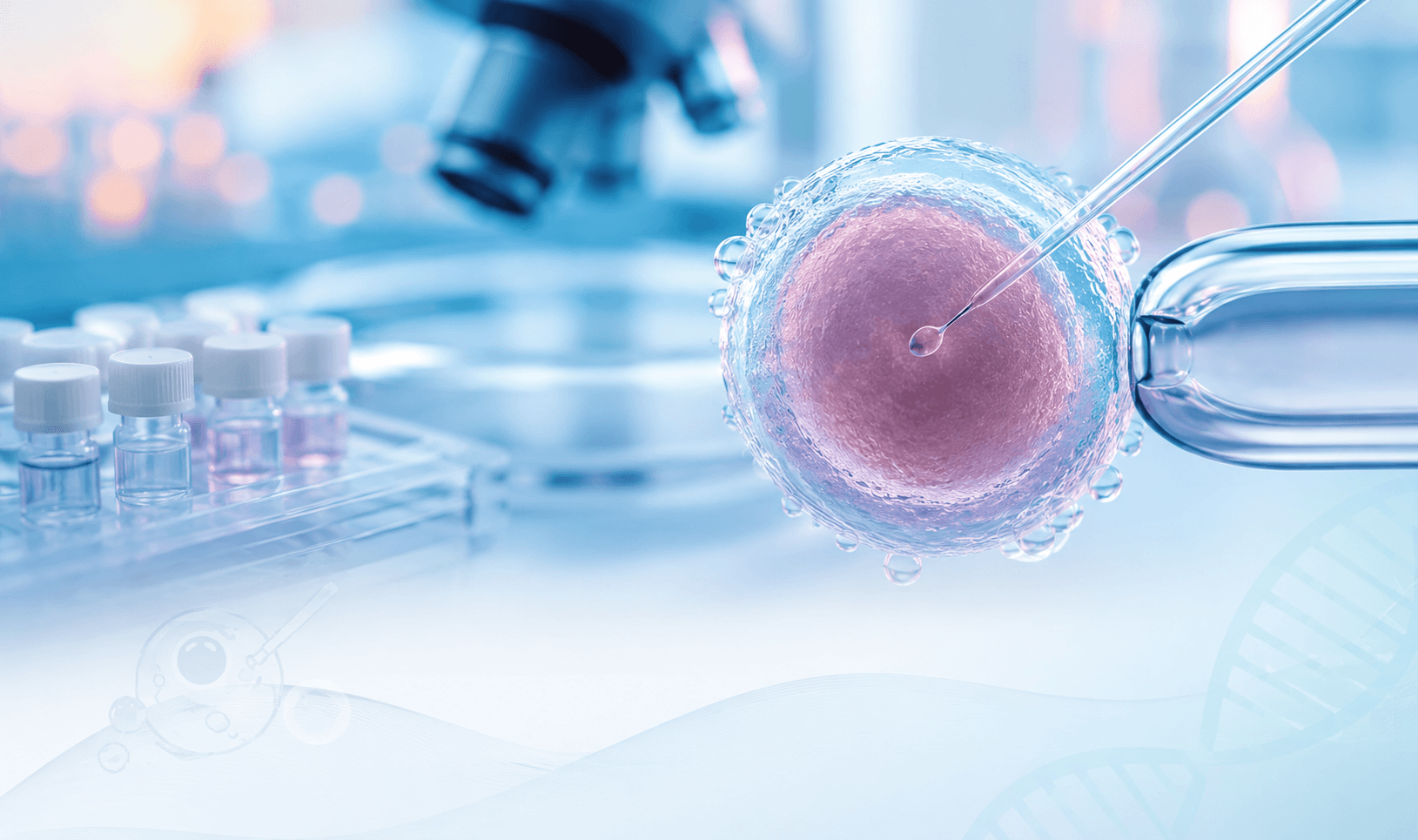
Embryo Transfer in Cyprus: Fresh or Frozen
Embryo transfer is the procedure in which a suitable embryo, developed as a result of in vitro fertilization or ICSI treatment, is placed into the expectant mother’s uterus using a thin catheter. At Vita Altera IVF Center, fresh or frozen embryo transfer is planned individually based on embryo development, uterine lining condition, hormone results, previous treatments, and the general health characteristics of the expectant mother.
What Is Embryo Transfer?
Embryo transfer is the stage of IVF treatment in which the embryo, monitored in the embryology laboratory, is placed into the uterine cavity of the expectant mother.
Following fertilization of egg and sperm cells through conventional IVF or ICSI methods, embryos are monitored in the laboratory environment. The embryo whose developmental characteristics make it suitable for transfer is determined through joint evaluation by the physician and the embryology team. During the transfer procedure, the embryo is loaded into a thin, soft catheter along with a small amount of special culture fluid. The catheter is passed through the cervix and the embryo is deposited in the appropriate area of the uterine cavity.Embryo transfer is typically a short procedure that does not require surgical incisions and can be performed in most patients without anesthesia.Embryo Transfer in Cyprus
The embryo transfer process in Cyprus is not limited to the day of the procedure alone. Embryo development, uterine preparation, correct timing of medication use, and precise determination of the transfer day must all be planned together.
At Vita Altera IVF Center, before treatment begins, the expectant mother’s medical history, uterine structure, hormone results, previous IVF attempts, and embryology reports of any frozen embryos are evaluated. If embryos created and stored at another center are planned for transfer, the embryo’s developmental day, freezing method, quality information, storage conditions, and necessary transportation procedures must be reviewed in advance.For our patients coming from Turkey or other countries, the initial consultation can be conducted online. Tests and treatment reports can be reviewed beforehand, allowing the arrival to Cyprus, ultrasound monitoring, and estimated transfer day to be planned in advance.Embryo Evaluation
The embryo’s developmental day, frozen status, and laboratory characteristics are assessed by the embryology team.Uterine Preparation
The thickness and structure of the uterine lining are monitored through ultrasound and hormone results.Personalized Transfer Schedule
Medication start dates, check-up appointments, and the program for arrival in Cyprus are tracked by a personal patient coordinator.What Is the Difference Between Fresh and Frozen Embryo Transfer?
The main difference between fresh and frozen embryo transfer is the time between the treatment cycle in which the embryo is created and when it is transferred to the uterus.
Fresh Embryo Transfer
Fresh embryo transfer is performed within the same treatment cycle in which the ovaries are stimulated and eggs are collected. The embryo is transferred to the uterus on the day its development is appropriate after fertilization.- Transfer occurs in the same treatment cycle as egg collection
- Embryos are transferred without being frozen
- Uterine lining and hormone results must be appropriate
- Can be considered in patients without high OHSS risk
- Embryo development and uterine preparation progress simultaneously
Frozen Embryo Transfer
Frozen embryo transfer, abbreviated as FET, involves thawing and transferring an embryo that was previously frozen using vitrification, in a suitable subsequent treatment cycle.- Transfer occurs in a different cycle from egg collection
- May not require another egg collection procedure
- Uterine preparation can be done with natural or medicated cycles
- Transfer date can be planned more flexibly
- Embryo is thawed and assessed for viability prior to transfer
Which Is More Suitable: Fresh or Frozen Transfer?
There is no single correct transfer method that applies to every patient. The decision between fresh and frozen transfer should be made by evaluating embryo, uterine, hormonal, and general health characteristics together.
Ovarian response to treatment
If the ovaries show an excessive response to medications and the risk of OHSS increases, fresh transfer may be postponed and embryos may be frozen instead.Hormone levels
Hormone results during the egg collection period can affect the timing between the uterus and embryo. If results are not favorable, a frozen transfer may be planned.Uterine lining
If the thickness, structure, or developmental timing of the endometrium is not suitable for transfer, embryos can be stored and the uterus prepared in a later cycle.Genetic testing plan
If PGT is to be performed on embryos, the biopsy results must be awaited, so embryos may be frozen and transferred in a subsequent cycle.Uterine issues requiring additional procedures
If conditions such as polyps, fibroids, intrauterine adhesions, or fluid accumulation require treatment, embryo transfer may be postponed.Personal treatment history
Previous transfer outcomes, embryo development, uterine preparation, and medication protocols used are all taken into account when creating the new transfer plan.In Which Situations May Fresh Embryo Transfer Be Postponed?
Even if embryos show appropriate development, it does not necessarily mean transfer must occur in the same cycle. The health of the expectant mother and the uterine environment are prioritized in the assessment.
- High risk of ovarian hyperstimulation syndrome
- Development of numerous follicles and presence of OHSS risk
- Uterine lining not showing sufficient development for transfer
- Hormone values not considered suitable for transfer timing
- Suspected presence of polyps, fibroids, or adhesions in the uterus
- Presence of hydrosalpinx that could cause fluid leakage into the uterus
- Genetic testing planned for the embryos
- Development of infection or a significant health issue during the transfer period
- Timing mismatch between embryo and uterine lining
- Physician requesting additional evaluation regarding pregnancy
What Examinations Are Performed Before Embryo Transfer?
Before transfer, the uterine cavity, uterine lining, and the general health status of the expectant mother are evaluated to determine whether they are suitable for embryo implantation.
Basic evaluations
- Gynecological examination and ultrasound
- Assessment of uterine lining thickness and structure
- Examination of the uterine cavity
- Required hormone tests
- Infectious disease screenings
- Review of medication plan
- Verification of embryo and transfer day information
Additional evaluations that may be needed
- Hysterosalpingography
- Hysteroscopy
- Polyp and fibroid evaluation
- Hydrosalpinx assessment
- Thyroid and blood glucose tests
- Coagulation or genetic evaluations
- Review of previous failed transfers
How Is the Uterus Prepared for Frozen Embryo Transfer?
In frozen embryo transfer, the uterine lining can be prepared either by monitoring natural ovulation or using medications containing estrogen and progesterone.
Natural Cycle
In women with regular menstruation and spontaneous ovulation, follicle development and ovulation are monitored through ultrasound and necessary hormone tests. The transfer day is determined according to the natural ovulation timing.Modified Natural Cycle
Follicle development is monitored, and ovulation timing can be planned using a trigger medication administered by the physician. Embryo transfer is scheduled according to the ovulation timing.Medicated Cycle
Estrogen and progesterone medications are used to prepare the uterine lining. This method may be considered for patients with irregular ovulation or when the transfer date needs to be planned.How Is Fresh Embryo Transfer Planned?
The fresh transfer plan is created by evaluating embryo development after egg collection together with the mother’s uterine and hormone results.
Egg retrieval
Eggs that develop following controlled ovarian stimulation are retrieved and transferred to the embryology laboratory.Fertilization of eggs
Mature eggs are fertilized using either conventional IVF or ICSI, depending on sperm characteristics and the treatment plan.Fertilization check
Eggs are examined for signs of fertilization, and embryos showing normal fertilization are monitored for development.Monitoring embryo development
Cell division and developmental characteristics of embryos are assessed by expert embryologists over several days.Uterine and hormone evaluation
The uterine lining, hormone results, and general condition of the mother are re-evaluated for fresh transfer.Transfer decision
If both embryo and uterine characteristics are deemed suitable, the transfer day is set. If suitability is not achieved, embryos may be frozen and transfer postponed.How Is Frozen Embryo Transfer Planned?
Frozen embryo transfer is based on synchronizing the preparation of the uterine lining with the developmental day of the embryo in terms of timing.
Initial evaluation
Menstrual regularity, uterine structure, previous transfers, embryo developmental day, and freezing information are assessed.Determining the preparation method
The appropriate method among natural, modified natural, or medicated uterine preparation is determined.Monitoring the uterine lining
Endometrial development is monitored via ultrasound and, when necessary, hormone tests.Progesterone or ovulation timing
The transfer day is matched with natural ovulation timing or progesterone duration according to the embryo’s developmental stage.Embryo thawing
The frozen embryo is thawed in the laboratory before transfer, and its viability is assessed by the embryologist.Embryo transfer
The embryo deemed suitable after thawing is transferred into the prepared uterus of the expectant mother.Day 3 Embryo Transfer and Blastocyst Transfer
Embryo transfer can be performed at the early cleavage stage or at the blastocyst stage, depending on the embryo’s development and the number of available embryos.
Day 3 Embryo Transfer
On the third day after fertilization, the embryo is generally at the cleavage stage. In some patients with limited embryo numbers or when the embryology team considers early transfer appropriate, day 3 transfer may be planned.- Embryo is transferred at the early cleavage stage
- May be considered for patients with a limited number of embryos
- Planned according to laboratory and clinical conditions
- Does not necessarily mean lower success for every patient
Blastocyst Transfer
The advanced developmental stage that an embryo reaches on the fifth or sixth day after fertilization is called the blastocyst stage. If sufficient embryos are developing, monitoring may continue to the blastocyst stage.- Embryo is transferred at a more advanced developmental stage
- Can help evaluate the developmental potential of embryos
- Can support single embryo transfer planning
- Not every embryo may reach the blastocyst stage
How Many Embryos Are Transferred?
The number of embryos to be transferred is determined by evaluating the goal of a healthy singleton pregnancy together with individual treatment characteristics and current regulations.
Transferring multiple embryos may increase the chance of twins or higher-order multiple pregnancies. Multiple pregnancies carry additional risks for both the mother and babies, such as premature birth, low birth weight, gestational diabetes, and hypertension. When determining the number of embryos, the developmental stage and quality of the embryos, the mother’s age, previous transfers, medical history, and applicable regulations are all taken into consideration.How Is Embryo Transfer Performed?
The procedural phase of fresh and frozen embryo transfer is largely the same. The main difference lies in the preparation process the embryo undergoes leading up to the transfer day.
Verification of patient and embryo information
Before transfer, the mother’s identity, embryo information, and the treatment protocol are verified according to safety procedures.Ultrasound preparation
If abdominal ultrasound imaging is planned, the patient may be asked to have a moderately full bladder to enhance uterine visualization.Preparation of the cervix
In the gynecological examination position, the cervix is visualized and prepared for the passage of the transfer catheter.Loading the embryo into the catheter
The embryo to be transferred is loaded into a thin transfer catheter by the embryologist along with a small amount of culture fluid.Ultrasound-guided transfer
The catheter is carefully passed through the cervix, and the embryo is deposited in the appropriate area of the uterine cavity under ultrasound guidance.Catheter check
After transfer, the catheter is checked in the embryology laboratory to confirm that the embryo was not retained inside the catheter.Post-transfer counseling
The patient is informed about medication use, daily activities, symptoms to watch for, and the date of the pregnancy test.What Should Be Considered After Embryo Transfer?
The goal after transfer is not to completely halt daily life, but to take medications regularly, avoid excessive physical strain, and follow the physician’s personalized recommendations.
- Use estrogen and progesterone medications at the specified times
- Do not discontinue medications or alter dosages without consulting the physician
- Avoid heavy lifting and intense exercise
- Do not completely stop normal daily movement
- Drink adequate fluids and maintain a balanced diet
- Do not smoke or consume alcohol
- Do not use new medications or supplements without physician approval
- Do not take the pregnancy test before the recommended date
- Contact the center in case of severe pain or heavy bleeding
- Follow the provided check-up and testing schedule
Symptoms That May Occur After Embryo Transfer
Experiencing no symptoms after transfer does not mean the treatment has failed, just as experiencing symptoms does not definitively indicate pregnancy.
Mild pelvic pain
Mild pelvic and abdominal sensitivity may occur due to the transfer procedure, ovarian enlargement, or the medications used.Light spotting
Brief and minimal spotting may occur due to the catheter’s contact with the cervix.Breast tenderness
Medications containing estrogen and progesterone may cause breast tenderness and a feeling of fullness.Bloating and fatigue
Hormonal medications, ovarian stimulation, and the emotional process may cause temporary bloating or fatigue.Factors Affecting Embryo Transfer Success
The success of embryo transfer is not dependent solely on the day of the procedure. The embryo’s biological characteristics, uterine structure, timing, and laboratory processes must all be evaluated together.
Age at egg retrieval
The age at which the eggs were collected is an important factor, particularly regarding the embryo’s chromosomal characteristics.Embryo development
The embryo’s cellular development, blastocyst structure, and laboratory assessments may affect the likelihood of implantation.Genetic characteristics
The embryo’s outward appearance alone does not guarantee it is chromosomally normal. Genetic characteristics may affect implantation.Uterine cavity
Conditions such as polyps, fibroids, adhesions, or anatomical abnormalities within the uterus may affect embryo implantation.Endometrium and timing
The compatibility between the development of the uterine lining and the embryo’s developmental day in terms of timing is important.Transfer technique
The deposition of the embryo using a soft catheter, at the correct position, and with minimal trauma is an important part of the treatment process.Embryo thawing process
In frozen transfers, the embryo must maintain its viability and developmental capacity after thawing.Laboratory conditions
Embryo culture, freezing and thawing protocols, and laboratory quality control support embryo development.Correct medication use
Particularly in frozen transfer programs, the correct use of progesterone on the specified day and time is important for transfer timing.Risks and Limitations of Embryo Transfer
Embryo transfer is generally a low-risk procedure. However, there are certain risks associated with the treatment outcome and the pregnancy process.
No pregnancy
The transferred embryo may fail to implant into the uterine lining, resulting in a negative pregnancy test.Early pregnancy loss
Even if the pregnancy test is positive, pregnancy development may stop early due to embryo-related or maternal factors.Multiple pregnancy
Transferring more than one embryo may increase the chance of twins or higher-order multiple pregnancies.Ectopic pregnancy
Although rare, the embryo may implant outside the uterus even after being placed into the uterine cavity. Ultrasound follow-up after a positive test is important.Loss of viability after thawing
A small proportion of frozen embryos may not maintain their viability or transferable characteristics after thawing.Procedure postponement
If the uterine lining, hormone results, or general health status is not suitable, the transfer may be postponed for safety reasons.Embryo Transfer Costs
Embryo transfer costs in Cyprus may vary depending on whether the transfer is fresh or frozen, the preparation method, laboratory procedures, and any additional evaluations required.
Fresh embryo transfer is generally included as part of the IVF treatment package that involves egg collection and embryo creation. Frozen embryo transfer, on the other hand, is planned as a separate treatment program consisting of uterine preparation, monitoring, embryo thawing, and the transfer procedure. The main factors that may affect the total treatment cost include:- Whether fresh or frozen embryo transfer is performed
- Natural or medicated uterine preparation program
- Estrogen and progesterone medications used
- Ultrasound and hormone monitoring
- Embryo freezing and storage
- Thawing of frozen embryos
- Transportation of embryos from another center
- Required uterine evaluations
- Genetic testing or biopsy procedures
- Additional laboratory applications
- Validity status of previous tests
- Travel and accommodation preferences
Why Choose Vita Altera IVF Center?
At Vita Altera, embryo transfer is planned not merely as a brief procedure of placing the embryo into the uterus, but as a comprehensive process that includes uterine preparation, embryo evaluation, safety checks, and post-transfer follow-up.
- Personalized fresh and frozen transfer planning
- Experienced obstetricians and gynecologists
- Experienced embryology and laboratory team
- Advanced embryology laboratory
- EmbryoScope+ for embryo development monitoring
- Modern vitrification and embryo thawing methods
- Chip ID for embryo-patient matching safety
- Personalized ultrasound-guided transfer
- Natural and medicated FET preparation options
- Fresh and frozen blastocyst transfer
- Personal patient coordinator support
- Multilingual patient counseling
- Online pre-consultation opportunity
- Coordination regarding embryo transportation process
- Regular pre- and post-transfer follow-up