



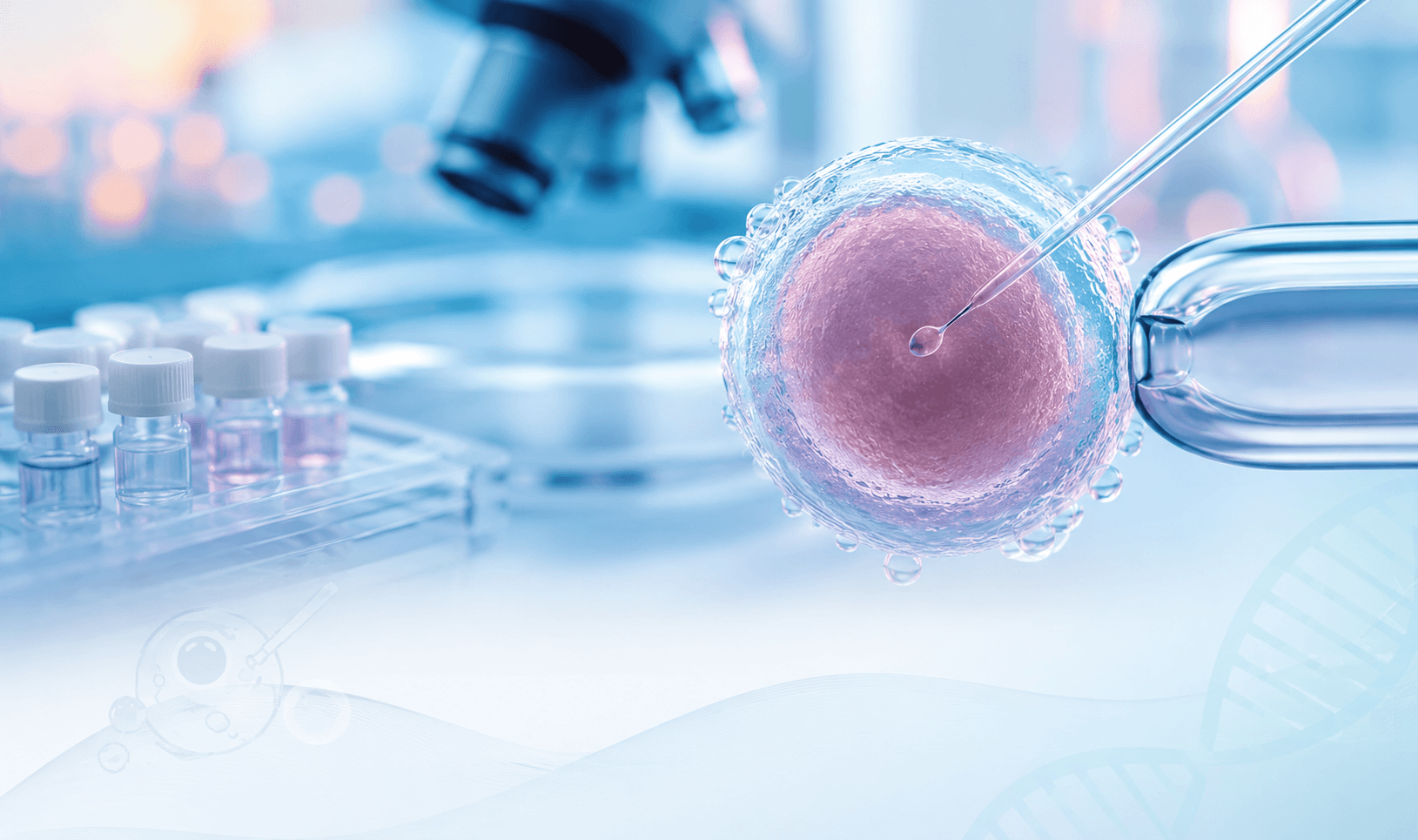
IVF Treatment in Cyprus
IVF treatment in Cyprus is an assisted reproductive method based on the fertilization of egg and sperm cells in an embryology laboratory, monitoring the developing embryos, and transferring the suitable embryo(s) to the expectant mother’s uterus. At Vita Altera IVF Center, the treatment process is personalized based on the couple’s medical history, the mother’s age, ovarian reserve, sperm characteristics, and previous treatment outcomes.
What is IVF Treatment?
IVF treatment, medically known as in vitro fertilization (IVF), is an assisted reproductive method that enables the fertilization of egg and sperm cells in a laboratory setting.
During treatment, the expectant mother’s ovaries are stimulated with controlled medications. The developing eggs are retrieved through an egg collection procedure and, on the same day, are placed with a sperm sample in the embryology laboratory for fertilization.The embryos resulting from fertilization are monitored by expert embryologists for several days. The embryo(s) deemed suitable for development are transferred to the expectant mother’s uterus at a time determined by the doctor.In the classical IVF method, eggs are combined with prepared sperm cells in the laboratory. In the microinjection method, a single selected sperm cell is injected directly into the egg.IVF Treatment in Cyprus
IVF treatment in Cyprus is one of the assisted reproduction options considered by patients coming from Turkey and various other countries. For a successful and safe process, it is important not only to choose a country or clinic but also to have the right medical evaluation and a treatment plan tailored to the individual.
At Vita Altera IVF Center, the initial stage involves evaluating the couple’s medical history, previous treatments, tests related to female and male reproductive health, and other health conditions that may affect pregnancy.For patients coming from abroad or Turkey, the initial consultation can be conducted online. Previous treatment reports and existing tests can be sent to our doctors, allowing for a preliminary evaluation before arriving in Cyprus.The treatment start date, medication schedule, check-up days, time of arrival in Cyprus, egg collection, and embryo transfer dates are all planned according to the personalized treatment program.Online Preliminary Evaluation
Your medical history, test results, and previous IVF attempts can be reviewed before you come to Cyprus.Personalized Treatment Plan
Medication dosage and treatment method are determined based on age, ovarian reserve, sperm characteristics, and previous outcomes.Patient Coordinator Support
Coordination is provided for everything from tests and medication schedules to travel planning and post-embryo transfer follow-ups.Who is IVF Treatment Suitable For?
IVF treatment can be considered upon a doctor’s evaluation for couples who cannot achieve pregnancy naturally or when other assisted reproductive methods are insufficient.
- Women with blocked or dysfunctional fallopian tubes
- Women with low ovarian reserve
- Women experiencing ovulation problems
- Women with diminished egg quantity or quality due to advanced age
- Women diagnosed with endometriosis
- Men with significant issues in sperm count, motility, or morphology
- Men with no sperm in the ejaculate but where sperm can be obtained surgically
- Couples who have had unsuccessful insemination treatments
- Those experiencing recurrent pregnancy loss or implantation failure
- Couples at risk of genetic diseases that could prevent natural conception
- Couples with unexplained infertility
- Couples with previous unsuccessful IVF attempts
When Should You See an IVF Specialist?
While the duration of trying to conceive is important, in some health conditions, evaluation may be necessary without waiting too long.
If you haven’t conceived after a long period
If pregnancy has not occurred despite regular, unprotected intercourse, a joint evaluation of the female and male partner may be recommended.If the mother’s age is advanced
As age increases, egg quantity and quality may decrease, so waiting too long for an evaluation may not be advisable.If there is menstrual irregularity
Irregular or infrequent menstruation can be a sign of ovulation problems and may require a detailed examination.If there is a known health issue
If there are conditions like blocked tubes, endometriosis, low ovarian reserve, previous surgeries, or severe sperm problems, early evaluation is recommended.Which Tests are Performed Before IVF Treatment?
Before starting IVF treatment, both female and male reproductive health are evaluated together. The scope of the tests requested may vary depending on the couple’s medical history.
Evaluations for the expectant mother
- Gynecological examination and ultrasound
- Antral follicle count
- AMH and necessary hormone tests
- Evaluation of the uterus and endometrial lining
- Infectious disease screenings
- Thyroid and blood sugar evaluations
- Hysterosalpingography (HSG) if necessary
- Hysteroscopy if necessary
- General health assessment for pregnancy suitability
Evaluations for the expectant father
- Semen analysis (spermiogram)
- Infectious disease screenings
- Urology or andrology evaluation
- Hormone tests if necessary
- Sperm DNA fragmentation test if necessary
- Genetic analyses if deemed necessary
- Review of previous sperm and treatment results
- Assessment of suitability for surgical sperm retrieval methods
What is the Difference Between Classical IVF and Microinjection?
The fundamental difference between the IVF and ICSI methods lies in how the egg is fertilized in the laboratory. In both methods, embryo development is monitored in the laboratory environment.
Classical IVF
In the classical IVF method, prepared sperm cells are placed in a special culture dish with the eggs in the laboratory. One of the sperm cells is expected to fertilize the egg naturally.- Egg and sperm cells are brought together in the lab
- The sperm cell is expected to reach the egg on its own
- Can be considered for patients with suitable sperm characteristics
- Fertilization is checked the next day
Microinjection – ICSI
In the ICSI method, a single sperm cell selected by the embryologist is injected directly into a mature egg using a specialized microscope and a fine needle.- A suitable sperm is selected for each mature egg
- The sperm is injected directly into the egg
- Can be considered for patients with severe male factor infertility
- May be considered in cases of previous fertilization failure
How is IVF Treatment Performed in Cyprus?
The IVF process consists of sequential medical and laboratory stages, from the initial evaluation to the pregnancy test.
Initial consultation and infertility evaluation
The couple’s medical history, pregnancy history, previous treatments, and existing tests are reviewed. Missing tests are identified, and a personalized treatment plan is prepared.Determining the personalized treatment protocol
The type of medication and starting dose are determined based on the mother’s age, weight, ovarian reserve, ultrasound findings, and previous treatment responses.Controlled ovarian stimulation
Hormonal medications are used to enable the development of multiple eggs. It is important to administer the medications at the dose and time specified by the doctor.Monitoring follicle development
The ovarian response to medications is monitored via ultrasound and necessary blood tests. Medication dosages may be adjusted based on the results.Trigger shot (Final oocyte maturation)
When follicles reach appropriate development, a trigger shot is administered to support the final maturation of the eggs. The timing of the egg collection is planned according to this injection.Egg collection procedure
Eggs are collected via a short procedure performed under ultrasound guidance. The collected eggs are assessed for maturity in the embryology laboratory on the same day.Sperm sample preparation
The sperm sample provided by the father is prepared in the laboratory. In some cases where usable sperm cannot be obtained, surgical methods like PESA, MESA, TESA, or TESE may be considered.Fertilization of the eggs
Mature eggs are subjected to fertilization using the classical IVF or microinjection method, depending on sperm characteristics and the treatment plan.Monitoring embryo development
The development of the embryos formed after fertilization is monitored by expert embryologists. Cell development and embryo characteristics are evaluated to create the transfer plan.Embryo transfer
The embryo(s) deemed suitable for development are transferred into the mother’s uterus using a thin catheter. The procedure is usually quick and does not require anesthesia.Freezing of suitable embryos
If embryos of suitable development and quality remain after the transfer, they may be frozen for future use, subject to the couple’s consent and current regulations.Pregnancy test and follow-up
The date for the pregnancy test after the embryo transfer is communicated to the patient. If the result is positive, follow-up blood tests and a pregnancy ultrasound are planned.How Long Does IVF Treatment Take?
The duration of IVF treatment can vary depending on the protocol used, the mother’s ovarian response, embryo development, and whether a fresh or frozen transfer is performed.
Ovarian stimulation with medications typically takes about one to two weeks. During this period, a few ultrasound and, if necessary, blood test controls are performed.After the egg collection procedure, the eggs are fertilized, and embryo development is monitored. The embryo transfer is planned on a suitable day based on embryo development and the condition of the uterine lining.In some patients, the embryo is transferred in the same treatment cycle. In others, embryos are frozen and used in a later period when the uterus is more suitable for transfer.Fresh Embryo Transfer vs. Frozen Embryo Transfer
Embryo transfer can be performed using a fresh embryo in the same treatment cycle, or embryos can be frozen and transferred at a different time.
Fresh embryo transfer
The developing embryo is transferred to the mother’s uterus within the same treatment cycle after egg collection and fertilization.- Transfer is done in the same treatment cycle
- The uterine lining must be suitable for transfer
- Embryo development and hormone levels are evaluated
- Does not require additional preparation for a frozen transfer
Frozen embryo transfer
Embryos are frozen and stored. They are thawed and transferred in a subsequent menstrual cycle after the mother’s uterus is appropriately prepared.- Transfer date can be planned more flexibly
- Uterine preparation is done in a separate cycle
- No need for a new egg collection procedure
- Embryos are thawed and evaluated before transfer
Factors Affecting the Success of IVF Treatment in Cyprus
The outcome of IVF treatment is not dependent on a single factor. Female and male reproductive health, embryo development, uterine structure, and laboratory processes should be evaluated together.
Mother’s age
Age is one of the most important factors affecting egg quantity and quality.Ovarian reserve
The ovarian response to medication and the number of eggs that can be obtained can influence the treatment process.Egg quality
Obtaining mature and viable eggs is crucial for embryo formation.Sperm characteristics
Sperm count, motility, morphology, and, if necessary, DNA integrity are evaluated.Fertilization outcome
Not all collected eggs may be mature, and not all mature eggs may fertilize.Embryo development
The cellular development of embryos and laboratory assessments are important in creating the transfer plan.Uterine structure
The uterine cavity and endometrial lining must be suitable for embryo implantation.Laboratory conditions
The quality processes of the embryology laboratory, the systems used, and the team’s experience are crucial parts of the treatment.Personalized protocol
Adjusting the medication dosage and treatment protocol based on the patient’s ovarian characteristics is important.Additional Methods That May Be Used in IVF Treatment
In some patients, additional laboratory or genetic evaluations may be considered based on medical needs and previous treatment outcomes. These methods are not considered necessary or beneficial for every patient.
Microinjection – ICSI
A fertilization method where a single selected sperm cell is injected directly into a mature egg.Embryo freezing
Allows suitable embryos not transferred to be frozen and stored for potential future use.PGT genetic testing
May be planned for genetic evaluation of embryos in cases with specific genetic disease risks or when medically deemed appropriate.Surgical sperm retrieval
In some patients with no sperm in the ejaculate, methods such as PESA, MESA, TESA, or TESE may be considered to obtain sperm.Embryo monitoring systems
Monitoring embryo development within the incubator using time-lapse systems can support the embryological assessment.Sperm assessment technologies
Laboratory and AI-based technologies that support the evaluation of sperm cells may be used in patients where deemed necessary.Safety and Potential Risks in IVF Treatment
IVF treatment is a process that requires regular medical follow-up. Before starting treatment, patients should be informed about the medications, procedures, and potential risks.
Ovarian Hyperstimulation
In some patients, the ovaries may respond more than expected to the medications. Regular monitoring and patient-specific medication dosages help reduce this risk.Egg collection procedure
Short-term pain, tenderness, or spotting may occur after egg collection. Information about rare risks is provided before the procedure.Multiple pregnancy
Transferring more than one embryo increases the chance of twins or higher-order multiple pregnancies. The number of embryos transferred is determined based on individual and medical evaluation.Emotional burden
The waiting period and uncertainty of the outcome can create emotional stress for couples. Open communication and regular information can help ease the process.IVF Treatment Costs in Cyprus
IVF treatment costs in Cyprus can vary depending on the scope of the treatment program, required medications, laboratory methods, and additional procedures needed.
Since every patient’s ovarian reserve, sperm characteristics, and treatment history differ, it may not be possible to make an accurate assessment based solely on a standard package price.The main factors that can affect the total treatment cost include:- Initial evaluation and necessary tests
- Type and dosage of hormonal medications
- Classical IVF or microinjection method
- Egg collection procedure
- Embryo culture and laboratory procedures
- Embryo transfer
- Need for embryo freezing and storage
- Need for genetic testing
- Need for surgical sperm retrieval
- Additional specialist consultations
- Accommodation and transportation preferences
- Validity of previous tests
Why Vita Altera IVF Center?
At Vita Altera, IVF treatment is not merely seen as egg collection and embryo transfer. The medical, laboratory, and coordination processes are planned together, from the initial evaluation to the pregnancy test.
- Personalized IVF treatment plan
- Experienced Obstetrics and Gynecology specialists
- Experienced embryology and laboratory team
- Advanced embryology laboratory
- EmbryoScope+ for embryo development monitoring
- Chip ID for sample matching and security system
- AI-supported sperm assessment when necessary
- IVF and microinjection options
- Embryo freezing service
- Genetic evaluation options
- Personal patient coordinator support
- Multilingual patient counseling
- Online preliminary consultation opportunity
- Support for transportation and accommodation planning
- Regular follow-up before and after treatment