


PATIENT GUIDE
Which IVF Treatment Is Right for Me?
The right treatment for you is not determined solely by your age or a single test result. Your ovarian reserve, sperm characteristics, uterine and tubal condition, pregnancy history, previous treatments, and personal needs are all evaluated together to create a personalized roadmap.
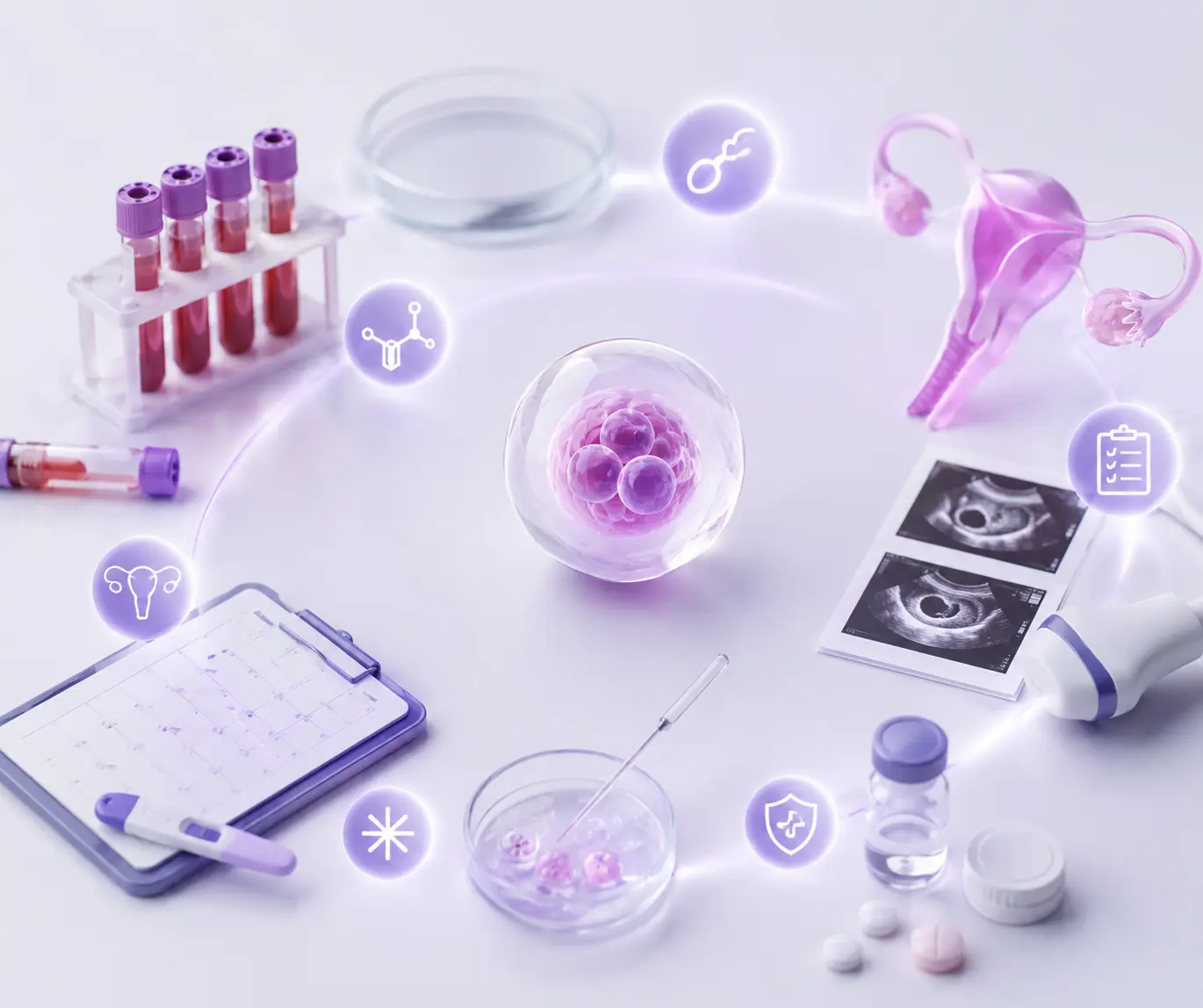
PERSONALIZED APPROACH
The Same Treatment Is Not Right for Every Patient
Even two patients with similar test results may require different treatment plans due to age, pregnancy history, duration of trying, and personal circumstances.
The goal in choosing a treatment is not merely to apply a method, but to determine the most appropriate and safe approach based on current medical findings.For some patients, simpler methods like ovulation tracking or intrauterine insemination (IUI) may be considered, while for others, IVF, ICSI, donation, or genetic testing may come to the forefront.01Female and male factors are evaluated together
02Age and duration of trying to conceive are considered
03Results of previous treatments are reviewed
04Benefits, risks, and alternatives are explained together
The treatment plan is a personal roadmapThe chosen method is determined by evaluating medical suitability, expected contribution, treatment duration, personal expectations, and available options together.
FACTORS INFLUENCING TREATMENT DECISION
How Is the Right Treatment for You Determined?
Your doctor evaluates multiple medical and personal factors together when deciding on the treatment method.- 01
Age and Ovarian Reserve
Age, AMH result, antral follicle count, and the ovarian response to medications in previous treatments are evaluated together. - 02
Sperm Characteristics
Sperm count, motility, morphology, and whether fertilization problems have occurred before are examined. - 03
Uterus and Fallopian Tubes
Uterine structure, endometrial lining, tubal condition, findings related to fibroids, polyps, or surgeries are assessed. - 04
Pregnancy and Treatment History
Previous pregnancies, miscarriages, ectopic pregnancies, and results from IUI and IVF attempts are reviewed. - 05
Genetic and Personal Factors
Family history of hereditary diseases, personal health status, time available for treatment, and family planning goals are taken into account.
ASSISTED REPRODUCTIVE TECHNOLOGIES
Which Treatment Options Can Be Considered?
The suitability of the following methods is determined through a doctor’s examination and evaluation of test results together. Not every method is suitable for every patient.Intrauterine Insemination — IUI
Can be considered when the tubes are suitable, sperm values are adequate, and in some cases of unexplained infertility.In Vitro Fertilization — IVF
Can be considered in cases of tubal problems, prolonged inability to conceive, endometriosis, age-related factors, or previous failed treatments.Intracytoplasmic Sperm Injection — ICSI
Can be used in cases of significant male factor infertility, sperm obtained via surgical methods, or fertilization failure in previous treatments.Donation Programs
Egg, sperm, or embryo donation can be evaluated based on the patient’s medical findings and personal circumstances.Tandem Cycle
Can be planned with donor eggs alongside the patient’s own eggs for selected patients with low ovarian reserve who wish to use their own eggs.Genetic Testing — PGT
Embryos can be examined in cases of known genetic disease, chromosomal structural abnormalities, or selected medical conditions determined by the doctor.Fertility Preservation
Egg, sperm, or embryo freezing procedures can be considered for individuals who wish to preserve their reproductive potential for the future.Surgical Sperm Retrieval
PESA, MESA, or TESE methods can be considered when no sperm is found in the semen or adequate sperm cannot be obtained via ejaculation.The treatment method is not chosen solely based on success ratesThe suitability of a treatment is determined by evaluating the expected benefit, potential risks, ovarian response, sperm characteristics, treatment duration, cost, and personal circumstances together.
EVALUATION BASED ON MEDICAL FINDINGS
Which Methods Might Be Considered in Certain Situations?
The following examples are for general informational purposes. Personal treatment decisions can only be made by a doctor’s evaluation.Low Ovarian Reserve
Based on age, AMH, antral follicle count, and previous ovarian response, treatment with own eggs, tandem cycle, or egg donation may be considered.Problems with Sperm Values
Based on sperm findings, ICSI, surgical sperm retrieval, urological evaluation, or sperm donation for suitable patients may come into consideration.Family History of Hereditary Disease
After genetic counseling, PGT-M, PGT-SR, donation programs, or alternative family-building options may be evaluated.Blocked Fallopian Tubes
If both tubes are blocked, IVF treatment, where eggs and sperm are combined in the laboratory, may come into consideration.Recurrent Failed Attempts
Previous medication protocols, egg counts, fertilization results, embryo development, and uterine evaluation are re-examined.Fertility Preservation
Based on age, medical treatments, surgical plans, and personal family planning, egg, sperm, or embryo freezing may be considered.OVARIAN RESERVE
Can I Undergo Treatment with My Own Eggs?
The answer to this question should not be given based solely on AMH results or age.
Your doctor evaluates your age, antral follicle count, hormone results, menstrual regularity, and the number of eggs obtained in previous treatments together.A low ovarian reserve does not always mean that treatment with your own eggs is impossible. However, the expected number of eggs, potential outcomes, and alternative options should be clearly discussed.- Age and ovarian reserve are evaluated together
- Previous response to medications is examined
- Information is provided about the expected number of eggs
- The option of treatment with own eggs is assessed
- If necessary, tandem or donation options are explained
!
AMH test alone does not indicate the chance of pregnancy
The AMH result can help predict the potential ovarian response to medications. Egg quality and the chance of pregnancy are evaluated together with age and other medical findings.
ALTERNATIVE TREATMENT PROGRAMS
When Can Donation or Tandem Cycle Be Considered?
The suitability of donation programs is evaluated considering medical findings, patient preferences, center protocols, and applicable regulations.Use of Donor Eggs
Can be considered in cases of ovarian failure, severely low reserve, recurrent poor response, or certain genetic conditions.Planning Two Options Together
For selected patients with low reserve who wish to try their chance with their own eggs, donor eggs can be prepared as an alternative within the same treatment cycle.Other Donation Options
Can be considered when usable sperm cannot be obtained, in cases of serious genetic risk, or when there are significant factors originating from both eggs and sperm.The donation decision is not made based solely on test resultsIn addition to medical suitability, understanding the genetic, psychological, legal, and personal dimensions of the treatment is important.

EMBRYO GENETICS
Is Genetic Testing Necessary for Every IVF Patient?
No. PGT methods are not a routine application for every patient.
PGT-M or PGT-SR can be considered in cases of known single-gene disorders, chromosomal structural abnormalities, or specific genetic risks.PGT-A, which examines the chromosome number in embryos, can be discussed for selected patients considering age, embryo number, previous treatment results, and personal medical findings.- Known hereditary disease in the family
- Determination of genetic carrier status in one of the partners
- Detection of chromosomal structural abnormality
- Evaluation of suitability through genetic counseling
- Explanation of the test’s limitations and expected contribution
!
Genetic testing does not guarantee a healthy pregnancy
Transferring an embryo deemed suitable by PGT does not guarantee pregnancy or live birth. The scope and limitations of the test should be explained during genetic counseling.STEP-BY-STEP TREATMENT DECISION
How Is a Personalized Treatment Plan Created?
The treatment decision is not made based on a single consultation or a single test result, but as a result of a stepwise evaluation.- 01
Your Medical History Is Taken
Your age, pregnancy history, menstrual regularity, diseases, surgeries, and medications you use are evaluated. - 02
Your Test Results Are Reviewed
Hormone tests, ultrasound results, semen analysis, and previous treatment reports are evaluated together. - 03
Treatment Options Are Identified
Methods that can be considered based on your medical findings, alternatives, and necessary additional examinations are explained. - 04
Benefits and Risks Are Discussed
The expected contribution, potential risks, limitations, and treatment duration of each option are shared with you. - 05
Treatment Schedule Is Prepared
Based on the preferred method, the medication program, check-ups, laboratory stages, and Cyprus planning are created.
HOLISTIC ASSESSMENT
Information That Is Not Sufficient on Its Own in Treatment Choice
None of the following results alone can definitively determine which treatment will be applied.01Looking only at the AMH result
02Evaluating only the patient’s age
03Making a decision based on a single semen analysis
04Looking only at the number of previous failed attempts
05Relying solely on a single ultrasound finding
06Applying the same medication protocol to every patient
07Recommending the same genetic tests to all patients
08Considering only general success rates
Personal success probability may differ from the center averageGeneral success rates do not predict a single patient’s outcome. Personal assessment should be made by considering age, egg and sperm characteristics, embryo development, uterine structure, and previous results together.
INFORMED TREATMENT DECISION
What Can You Ask Your Doctor When Choosing a Treatment?
Understanding the recommended method, alternatives, and the reasoning specific to you can facilitate the decision-making process.Why is this treatment considered suitable for me?
You can ask your doctor which test, examination, or treatment history the recommended method is based on.
Are there other treatment options I can consider?
You can discuss whether a simpler or different method might be suitable, and the benefits and limitations of the options.
Is treatment with our own eggs and sperm possible?
You can learn about the potential outcomes of this option based on your current ovarian reserve, sperm findings, and previous treatment results.
Why is donation or tandem cycle being recommended?
You can ask which medical findings the recommendation is based on, the possibility of treatment with your own eggs, and the differences between the options.
Do I need additional tests or laboratory procedures?
You can request information about the purpose of the recommended test, its scientific basis, how it might change the treatment outcome, and the additional cost.
When can I start the treatment?
You can learn about the possible start date based on the currency of tests, the menstrual cycle, the method to be applied, and the travel plan.
FREQUENTLY ASKED
FAQs About Treatment Choice
Can I find out which treatment is suitable for me online?
Information online can help you understand treatment options but cannot replace a personal treatment decision. The appropriate method must be determined through a doctor’s examination and test results.
Does every infertility patient need IVF?
No. Depending on age, duration of trying, tubal condition, ovulation, and sperm findings, different options such as monitoring, medication, or IUI may be considered.
Is ICSI a different treatment from IVF?
ICSI is a laboratory method used to achieve fertilization during IVF treatment. A single sperm cell is injected directly into the egg.
If my age is high, do I need egg donation directly?
No. Age alone is not sufficient to make a donation decision. Ovarian reserve, ultrasound, hormone results, and previous treatment responses are evaluated together.
If my AMH is low, can I undergo treatment with my own eggs?
A low AMH does not definitively mean that treatment with your own eggs is impossible. It should be evaluated together with age, follicle count, and previous ovarian response.
Is PGT necessary for every IVF treatment?
No. PGT methods may be considered in cases of known genetic disease, chromosomal changes, or selected medical conditions determined by the doctor.
If my previous treatment failed, will the same method be applied again?
After examining the previous medication protocol, egg count, fertilization, embryo development, and transfer process, the same method may be applied with modifications, or a different option may be considered.
Can the initial assessment be done online?
Current tests and treatment reports can be shared before an online consultation. However, your doctor may request a physical examination, ultrasound, or additional tests.
PATIENT GUIDE
Review Your Treatment Process in Detail
You can access other patient guides you may need while preparing for treatment.YOUR PERSONALIZED TREATMENT ROADMAP