
Online Pre-Evaluation
Sperm analyses, hormone results, ultrasound evaluations, and previous IVF reports can be reviewed before you arrive in Cyprus. 02
VITA ALTERA IVF · TREATMENT GUIDE
Explore treatment options, procedures and individual assessments.
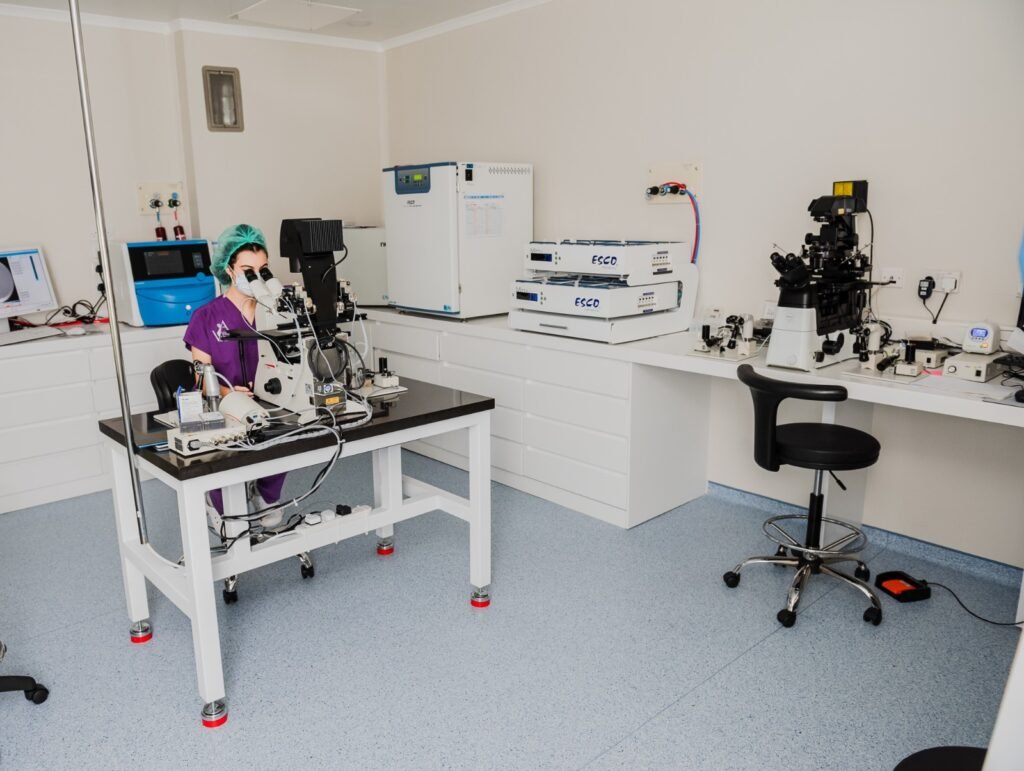
Microinjection, medically known as ICSI, is an advanced fertilization method in which a single sperm cell, selected by the embryologist, is injected directly into the mature egg.
At Vita Altera IVF Center, ICSI treatment is personalized based on sperm characteristics, egg quantity and quality, previous fertilization results, and the couple's medical history.

VITA ALTERA IVF 01
Microinjection is the process of injecting a single sperm cell directly into the cytoplasm of a mature egg using a specialized microscope and micromanipulation system. The international name for the procedure is intracytoplasmic sperm injection, abbreviated as ICSI.
ICSI is not a standalone fertility treatment but rather a laboratory fertilization technique used during the IVF process. The other stages—ovarian stimulation with medication, egg retrieval, embryo development monitoring, and embryo transfer—proceed similarly to conventional IVF. In the classic IVF method, prepared sperm cells are placed in the same laboratory dish with the eggs, and fertilization is expected to occur naturally when a sperm penetrates the egg on its own. In ICSI, the selected sperm cell is placed directly into the egg, bypassing the need to penetrate the egg's outer layers. This method is particularly useful when sperm count is very low, sperm motility or morphology is severely impaired, or when sperm have difficulty reaching and fertilizing the egg. Does ICSI guarantee pregnancy?No. Microinjection can overcome certain fertilization barriers by placing the sperm directly into the egg. However, not every injected egg will fertilize, not every fertilized egg will develop into a healthy embryo, and not every embryo transfer will result in pregnancy.
VITA ALTERA IVF 02
Microinjection treatment in Cyprus is a structured IVF process that includes comprehensive evaluation of both male and female reproductive health, ovarian preparation, egg retrieval, sperm selection, ICSI application, and embryo transfer.
At Vita Altera IVF Center, before treatment begins, the couple's medical history, previous IVF attempts, sperm analyses, ovarian reserve, and prior fertilization outcomes are carefully reviewed. The decision to use microinjection is not based solely on a single sperm analysis. It is determined by evaluating the post-preparation sperm characteristics, the number of usable sperm, the maturity status of the eggs, and previous laboratory results. For patients traveling from Turkey or other countries, the initial consultation can be conducted online. Test and treatment reports can be reviewed before arriving in Cyprus, allowing us to prepare the necessary tests and a tentative treatment schedule. 01
Sperm analyses, hormone results, ultrasound evaluations, and previous IVF reports can be reviewed before you arrive in Cyprus. 02
The choice between conventional IVF and ICSI is determined based on sperm and egg characteristics and previous fertilization outcomes. 03
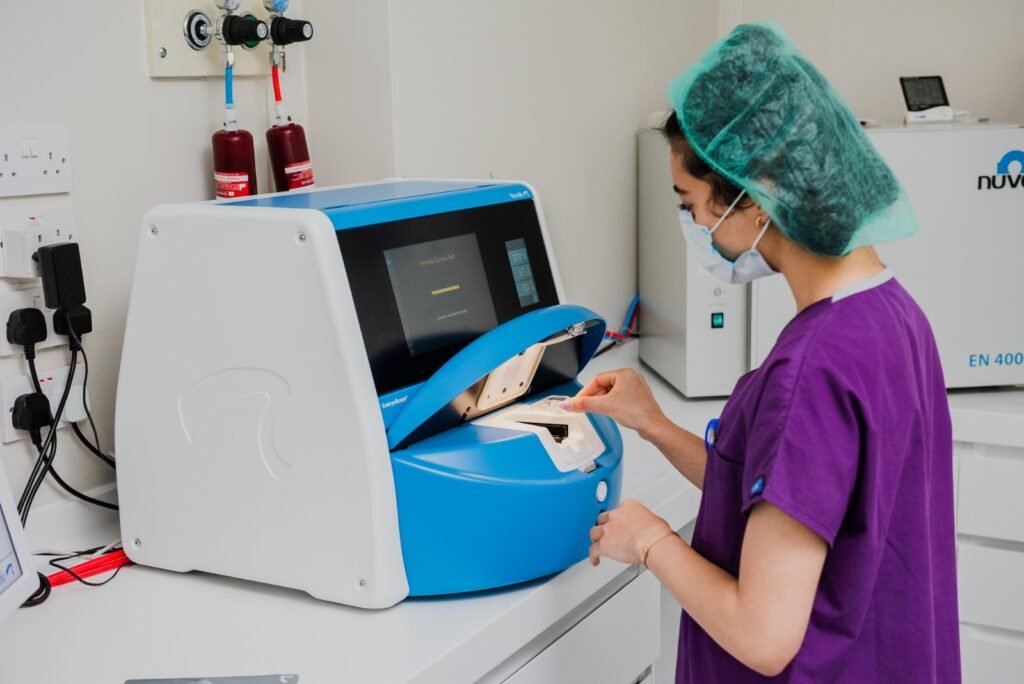
From fertilization check to embryo transfer, the entire laboratory process is managed by our experienced embryology team.
VITA ALTERA IVF 03
ICSI treatment is primarily indicated for patients with sperm-related fertilization issues and in special cases where the likelihood of fertilization with conventional IVF is considered low.
Does absence of sperm in the ejaculate mean treatment is impossible?No. In some patients with no sperm in the ejaculate, surgical sperm retrieval from the testis or epididymis may be considered. If obtained, these limited sperm cells can be used for microinjection, provided they are suitable.
VITA ALTERA IVF 04
Although ICSI is a widely used laboratory technique, it is not routinely required for all IVF patients.
For patients without male factor infertility, with normal sperm values, and no history of fertilization failure, conventional IVF may be an appropriate option. Advanced maternal age, diminished ovarian reserve, or unexplained infertility alone do not necessarily mean that ICSI will always yield better results. When deciding on ICSI, the focus should be not only on fertilization rates but also on healthy embryo development, pregnancy, and live birth outcomes. More advanced does not always mean more successfulRoutine use of microinjection in patients who do not need it can increase treatment costs and laboratory procedures. The choice of method should be based on sperm characteristics, egg quantity, previous fertilization outcomes, and the couple's specific situation.
VITA ALTERA IVF 05
The fundamental difference between IVF and ICSI lies in how the eggs are fertilized in the laboratory. The ovarian preparation, egg retrieval, embryo monitoring, and embryo transfer stages remain largely the same.
Prepared sperm cells are placed in the laboratory dish with mature eggs. One of the sperm cells is expected to penetrate the egg's outer layers and achieve fertilization naturally.
A single sperm cell selected by the embryologist is injected directly into the mature egg using a micromanipulator and a very fine injection needle.
Is IVF or ICSI more successful?There is no single answer that applies to everyone. For patients with severe male factor infertility or previous fertilization failure, ICSI can offer a significant advantage. In patients without male factor issues, however, ICSI has not been conclusively shown to improve live birth rates compared to conventional IVF.
VITA ALTERA IVF 06
Since microinjection is part of an IVF treatment, both the female partner's ovarian and uterine health and the male partner's reproductive health are thoroughly evaluated.
Is a single semen analysis sufficient?Sperm values can fluctuate over time. If a significant abnormality is found in the initial semen analysis, the doctor may recommend repeating the test under appropriate conditions, along with a urology evaluation or additional tests.
VITA ALTERA IVF 07
Microinjection is not just the injection procedure in the laboratory. The treatment consists of a series of sequential stages, from ovarian preparation to the pregnancy test.
1
The couple's medical history, semen analyses, ovarian reserve, previous IVF and fertilization outcomes are evaluated to create a personalized treatment protocol. 2
Hormonal medications prescribed by the doctor are used to stimulate the development of multiple eggs in the female partner's ovaries. 3
The ovarian response to the medications is tracked with ultrasound and necessary blood tests. Medication dosages may be adjusted based on follicle development. 4
When follicles reach the appropriate size, a trigger injection is administered to support the final maturation of the eggs. The timing of the egg retrieval is planned according to this injection. 5
Eggs are collected via a short procedure performed under ultrasound guidance. The retrieved eggs are evaluated for maturity in the embryology laboratory. 6
The sperm sample provided by the male partner undergoes specialized preparation in the laboratory. Motile and usable sperm cells are separated from the sample. 7
The cells surrounding the eggs are carefully removed. Only eggs that have reached the maturity stage suitable for microinjection are processed for ICSI. 8
The embryologist selects a sperm cell with favorable motility and structural characteristics based on laboratory assessment. The selection approach may vary depending on the sperm sample's properties. 9
The egg is secured with a specialized holding pipette. A single selected sperm cell is carefully placed into the egg's cytoplasm using a very fine injection pipette. 10
The day after the injection, the eggs are examined for signs of fertilization. Eggs showing normal fertilization are placed into embryo culture. 11
Cell division and embryo development are tracked by expert embryologists over several days. The transfer day is determined based on embryo development and the treatment plan. 12
The embryo with appropriate development is transferred to the female partner's uterus. Post-transfer medication instructions and the pregnancy test date are provided to the patient.
VITA ALTERA IVF 08
The selection of the sperm cell used in ICSI is one of the most critical steps in the embryology laboratory. The selection process is tailored to the characteristics of the sperm sample and the number of usable cells available.
Motile sperm cells are evaluated for viability and usability.
The structure of the sperm's head, midpiece, and tail is examined under the microscope to assess for significant structural abnormalities.
Cellular debris and unsuitable cells in the sperm sample can be removed using specialized laboratory preparation techniques.
The final selection is made by the experienced embryologist based on the sperm cell's motility and appearance under the microscope. How can AI support sperm selection?AI-assisted sperm evaluation systems can help analyze sperm motility and morphology more systematically. These technologies support the embryologist's assessment; however, they do not guarantee a healthy embryo or pregnancy.
VITA ALTERA IVF 09
In some patients with no sperm in the ejaculate or no usable sperm, surgical sperm retrieval from the testis or epididymis may be considered.
A method aimed at aspirating fluid containing sperm from the epididymis using a fine needle.
A microscopic surgical procedure to retrieve sperm from the epididymal ducts.
Methods that use needle aspiration or small tissue biopsies from the testis to search for sperm cells.
A surgical technique using a microscope to search for areas of the testis with potential sperm production, particularly in patients with very limited sperm production.
Whether surgical sperm retrieval is possible is determined based on the cause of infertility, hormone levels, genetic evaluations, and urology examination. Success in finding sperm cannot be guaranteed in advance.
Why is ICSI used with limited sperm?Conventional IVF may require a large number of motile sperm around each egg. Since ICSI uses just one selected sperm per mature egg, it can be a vital treatment option in cases where only a limited number of sperm are obtained surgically.
VITA ALTERA IVF 10
The laboratory microinjection step is performed on the day of egg retrieval. However, since ICSI is part of the IVF treatment, the total treatment duration also includes ovarian preparation and embryo transfer stages.
Ovarian stimulation with medication typically lasts about one to two weeks. Following egg retrieval, microinjection is performed on mature eggs the same day. The fertilization check is generally done the day after the procedure. Embryos showing normal fertilization are monitored for development over several days, and the appropriate transfer day is determined. If the endometrial lining or hormone levels are not suitable for a fresh transfer, embryos may be frozen, and the embryo transfer can be planned for a subsequent menstrual cycle. How many days should I stay in Cyprus?The length of stay in Cyprus depends on where the monitoring is performed, the ovarian response to medication, and the embryo transfer schedule. Once the treatment timeline is clearer, the estimated travel plan is shared by the patient coordinator.
VITA ALTERA IVF 11
Even though the sperm is placed inside the egg during ICSI, the outcome of the treatment is not solely dependent on the injection technique. Egg, sperm, embryo, uterine, and laboratory factors must all be considered together.
Age is one of the most significant factors influencing egg quantity, egg quality, and chromosomal risks in embryos.
The ovaries' response to stimulation and the number of eggs that can be retrieved can impact the treatment process.
Microinjection can only be performed on eggs that have reached the appropriate maturity stage.
Even when sperm is injected, the egg's cellular characteristics affect fertilization and embryo development.
Sperm motility, structure, viability, and genetic integrity can influence fertilization and embryo development.
Normal fertilization may not occur in every injected egg, and some cycles may result in no fertilization at all.
Not all fertilized eggs will reach a developmental stage suitable for transfer.
A suitable uterine cavity and endometrial lining are important for implantation after embryo transfer.
The precise execution of microinjection, embryo culture conditions, and laboratory quality processes are all important. Fertilization rates and pregnancy rates are not the sameICSI may improve fertilization chances for some patients; however, the number of fertilized eggs does not directly translate to pregnancy or live birth rates. Other factors like embryo development, uterine structure, and the female partner's age also influence the outcome.
VITA ALTERA IVF 12
Microinjection is performed by experienced embryologists using precise laboratory systems. However, like all medical and laboratory procedures, it carries certain risks and limitations.
There is a small but existing risk of damage to the egg cell during preparation or sperm injection.
Even though the sperm is injected into the egg, normal fertilization is not guaranteed.
Even if fertilization occurs, embryo development may slow down or stop before reaching the transfer stage.
Some types of severe male infertility may be associated with genetic factors. Genetic counseling and testing may be considered for appropriate patients. Does the risk stem from ICSI or the underlying infertility?Some studies suggest a slightly higher incidence of certain health issues in children born via ICSI. It is not always possible to definitively separate whether this is due to the procedure itself or the underlying genetic or medical factors that necessitated the treatment.
VITA ALTERA IVF 13
Microinjection costs in Cyprus can vary depending on the scope of the IVF program that includes the ICSI procedure, medications, laboratory applications, and any additional required procedures.
Microinjection is typically part of a comprehensive treatment that includes ovarian stimulation, monitoring, egg retrieval, sperm preparation, laboratory procedures, embryo development, and embryo transfer. Key factors that may influence the total treatment cost include:
What to consider when comparing prices?When comparing treatment fees, look beyond the total figure and check whether medications, anesthesia, egg retrieval, ICSI, embryo transfer, freezing, and storage are included in the quoted price. Current microinjection treatment scope and pricing information will be shared by our patient coordinators after evaluating your existing tests and medical history.
VITA ALTERA IVF 14
At Vita Altera, microinjection treatment is not viewed simply as injecting a sperm into an egg. The entire process, from the initial consultation to post-embryo transfer follow-up, is personalized for each patient.
Technology does not guarantee successMicromanipulation, embryo monitoring, and sperm evaluation technologies can support the laboratory process. However, the outcome of treatment depends on many personal factors including the female partner's age, egg and sperm characteristics, embryo development, uterine structure, and more.
VITA ALTERA IVF 15
VITA ALTERA IVF 16
For detailed information about microinjection in Cyprus, sperm evaluation, egg retrieval, ICSI application, embryo development, treatment duration, and current costs, you can contact Vita Altera IVF Center. Our patient coordinators will relay your existing tests to our doctors and embryology team, assisting you with online pre-evaluation, personalized treatment planning, and organizing your travel to Cyprus.

VITA ALTERA IVF · OUR TEAM
Tedavi seçenekleri, süreç ve Kıbrıs planlaması hakkında bize WhatsApp'tan yazabilirsiniz.