


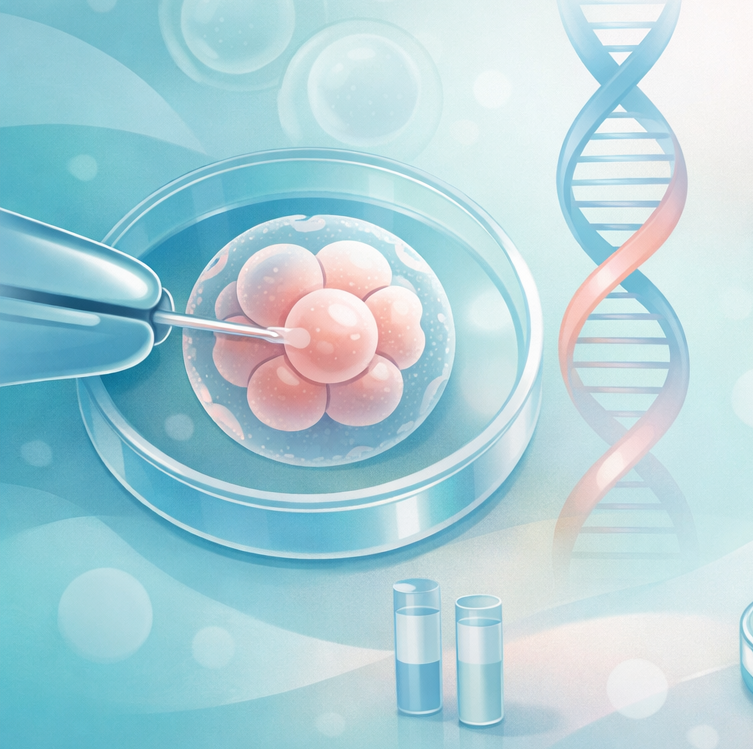
Types of IVF refer to the various medical approaches used within in vitro fertilization to help individuals and couples achieve pregnancy. There are different types of IVF because infertility has many causes, and each patient responds differently to treatment. Knowing are there different types of IVF allows patients to better understand which option may be most effective for their specific situation.
What Does “Type of IVF” Mean?
The term type of IVF describes how an IVF cycle is planned and performed, including hormone use, egg retrieval methods, fertilization techniques, and embryo transfer timing. Some types of IVF treatment focus on maximizing egg numbers, while others aim to work with the body’s natural cycle or address genetic or male-factor issues. In short, when patients ask what are the types of IVF, they are really asking how IVF can be personalized to fit different medical needs.
Why IVF Treatment Has Multiple Approaches
IVF treatment has multiple approaches because infertility is not caused by a single problem. Hormonal disorders, blocked tubes, low sperm quality, age-related factors, and unexplained infertility all require different strategies. This is why clinics offer several types of IVF treatments, ranging from conventional IVF to advanced techniques like ICSI or donor-based cycles. Multiple approaches allow doctors to improve success rates while minimizing unnecessary interventions.
How IVF Types Are Chosen for Each Patient
Doctors choose among the different types of IVF after evaluating medical history, fertility test results, and previous treatments. Age, egg reserve, sperm quality, and response to hormones play a major role. For example, patients with good ovarian reserve may benefit from standard IVF, while others may need a modified type of IVF such as natural or mild stimulation. The goal is always to select the safest and most effective option.
Key Factors Affecting IVF Treatment Selection
Several factors affect which types of IVF treatment are recommended. These include the cause of infertility, genetic risks, number of previous IVF attempts, and whether donor eggs or sperm are required. Emotional, financial, and ethical considerations also influence decision-making. Understanding what are the types of IVF helps patients actively participate in choosing a treatment plan that fits both their medical and personal circumstances.
Conventional IVF (Standard IVF)
Conventional IVF, also known as Standard IVF, is the most widely used and established form among the types of IVF treatment. It involves controlled ovarian stimulation to produce multiple eggs, followed by fertilization in a lab and embryo transfer. For many, this is the first and most familiar option when asking what are the types of IVF.
How Standard IVF Works
In standard IVF, patients undergo hormone injections to stimulate the ovaries to produce multiple eggs. These are retrieved in a minor surgical procedure and then fertilized with sperm in a laboratory. After a few days of embryo development, one or more embryos are transferred to the uterus. This type of IVF allows for the selection of the best-quality embryos, increasing the chance of implantation.
Who Is Standard IVF Best For?
Standard IVF is suitable for many patients, especially those under 38 with a normal or high ovarian reserve. It is often recommended for couples with unexplained infertility, endometriosis, or mild male-factor infertility. This approach provides more embryos for transfer or freezing, making it one of the most flexible types of IVF treatments in terms of future family planning.
Advantages & Limitations
The main advantage of conventional IVF is its high success rate due to the number of eggs retrieved and embryos available. It also allows for preimplantation genetic testing when needed. However, it requires high doses of hormones, which may lead to side effects like ovarian hyperstimulation syndrome (OHSS). It’s also more expensive than milder options, making it essential to weigh the pros and cons when selecting among the different types of IVF.
Natural Cycle IVF
Natural Cycle IVF is one of the gentlest types of IVF, designed to work with the body’s natural hormonal rhythm. Unlike conventional IVF, it avoids or minimizes the use of stimulation medications. Among the different types of IVF, this approach is appealing to those who want a more natural, low-intervention fertility treatment.
How Natural IVF Works Without Stimulation Medication
In Natural Cycle IVF, no or very minimal hormonal stimulation is used. The treatment monitors the woman’s natural cycle to identify the one egg her body naturally selects. Once the egg matures, it is retrieved and fertilized in the lab. Although only one embryo is usually available, this type of IVF treatment reduces medication risks and costs. It’s an ideal option for those sensitive to fertility drugs or wanting a drug-free process.
Ideal Candidates for Natural IVF
This type of IVF is often recommended for women who cannot tolerate hormone injections or those with a very low ovarian reserve, where high stimulation doesn’t increase egg numbers. It’s also suited for patients who prefer a more holistic, less invasive process. While it has lower success rates per cycle, some prefer its simplicity and minimal side effects compared to other types of IVF treatments.
When Natural IVF Is Recommended
Natural IVF may be suggested when hormone stimulation is either risky or ineffective, such as in older patients or those with a history of poor response to medication. It’s also used when avoiding OHSS is crucial or when previous cycles with high stimulation have failed. Although it may require more cycles, it’s a viable alternative within the types of IVF for selected patients prioritizing safety and comfort.
Mild Stimulation IVF (Mini IVF / Mini-Stim IVF)
Mild Stimulation IVF, also known as Mini IVF or Mini-Stim IVF, is a less intensive variation among the types of IVF treatment, aiming to produce fewer but high-quality eggs using lower doses of fertility drugs. It stands between natural and conventional IVF in terms of medication use and is gaining popularity as a cost-effective, patient-friendly approach.
Minimal Hormone Use Approach
Unlike standard IVF, which uses high doses of gonadotropins, mild stimulation IVF involves a lower dose of hormonal medications over a shorter duration. The goal is to retrieve around 3 to 7 high-quality eggs instead of a large number. This type of IVF reduces the risk of OHSS, lowers medication side effects, and is generally easier on the body. It’s a gentler protocol that still offers strong success potential for many patients.
Success Rates Compared to Standard IVF
While mild stimulation IVF may produce fewer eggs, the quality of embryos can be comparable to those from standard IVF cycles. Success rates per cycle may be slightly lower, but cumulative success over multiple mild cycles can rival conventional approaches. Among the different types of IVF, mini IVF offers a good balance for those prioritizing safety, lower cost, and emotional ease without significantly compromising effectiveness.
Who Should Consider Mini IVF?
This type of IVF treatment is ideal for women who want a less aggressive option, especially those who are young with good egg quality or those at risk for OHSS. It’s also suitable for women with diminished ovarian reserve, where heavy stimulation may not improve outcomes. Couples seeking a simpler, more affordable IVF process often consider mini IVF when researching what are the types of IVF that align with their lifestyle and values.
ICSI (Intracytoplasmic Sperm Injection) IVF
ICSI, or Intracytoplasmic Sperm Injection, is a specialized form of IVF used primarily to treat male infertility. Among the types of IVF, ICSI is distinguished by the way fertilization is achieved: a single sperm is directly injected into an egg, increasing the chances of successful fertilization in challenging cases.
How ICSI Works
In a traditional IVF cycle, sperm and egg are mixed in a lab dish and fertilization occurs naturally. In ICSI, however, embryologists select one healthy-looking sperm and inject it directly into the egg using a microneedle. This process bypasses many sperm-related issues and is especially helpful when sperm count, shape, or movement is poor. As one of the more advanced types of IVF treatments, ICSI offers a targeted solution for male-factor infertility.
Male-Factor Infertility & ICSI
ICSI is often recommended when male infertility is a contributing factor—such as low sperm count, poor motility, or abnormal morphology. It is also used in cases where sperm has been surgically retrieved, such as after a vasectomy or due to obstruction. This type of IVF allows couples to conceive even in severe male infertility cases where natural fertilization would be nearly impossible.
When ICSI Is the Preferred Method
Beyond male-factor infertility, ICSI may also be preferred in cases of previous IVF fertilization failure or when only a few eggs are available, maximizing their fertilization potential. Some clinics use ICSI routinely for all IVF cycles, though this is debated. As patients research different types of IVF, ICSI often emerges as a recommended approach for those facing sperm-related challenges or poor fertilization history.
IMSI, PICSI & Advanced Sperm Selection Methods
Among the types of IVF, advanced sperm selection techniques like IMSI and PICSI offer additional tools to improve fertilization quality, especially in cases involving male-factor infertility or repeated IVF failure. These methods help embryologists select the best sperm for fertilization, enhancing outcomes for certain patients.
What Is IMSI?
IMSI (Intracytoplasmic Morphologically Selected Sperm Injection) is an enhanced version of ICSI where sperm is examined under a high-magnification microscope—over 6,000x—allowing embryologists to choose sperm with the best morphology. This type of IVF treatment is especially helpful when sperm appears normal under standard ICSI but may have hidden defects. IMSI aims to reduce miscarriage risk and improve embryo quality.
What Is PICSI?
PICSI (Physiological ICSI) involves selecting sperm based on their ability to bind to hyaluronic acid—a component naturally found in the outer layer of eggs. Sperm that bind are believed to have better maturity and DNA integrity. PICSI provides a more natural selection process compared to regular ICSI, and is often used in cases of unexplained infertility or previous IVF failures.
Which Patients Benefit from Advanced Sperm Selection?
Advanced sperm selection is recommended for couples with recurrent implantation failure, poor embryo development, or severe male-factor infertility. These techniques can be added to ICSI to optimize outcomes. Among the different types of IVF, IMSI and PICSI are not standalone treatments but powerful enhancements for improving fertilization and embryo quality in complex cases.
Frozen IVF (FET Cycle – Frozen Embryo Transfer)
Frozen IVF, also known as a Frozen Embryo Transfer (FET) cycle, is a commonly used option among the types of IVF. Instead of transferring embryos immediately after fertilization, they are frozen and transferred in a later cycle. This allows for better timing and endometrial preparation, improving success rates in many cases.
How a Frozen IVF Cycle Differs from Fresh IVF
In a Frozen IVF cycle, embryos created during a previous IVF attempt are frozen (cryopreserved) and later thawed for transfer. This approach gives the patient’s body time to recover from ovarian stimulation, creating a more natural uterine environment for implantation. Unlike fresh cycles, the embryo transfer in FET is planned based on optimal hormonal conditions, making this type of IVF treatment more flexible and precise.
Success Rates of FET
Studies have shown that frozen embryo transfer can offer equal or even better success rates compared to fresh cycles, especially in women with high estrogen levels or risk of OHSS. Technological advancements in freezing (vitrification) have significantly improved embryo survival rates. Among the different types of IVF, FET is particularly favored for its safety, predictability, and efficiency in managing embryos over multiple cycles.
When Frozen Transfer Is Recommended
FET is often recommended when a fresh transfer is not ideal due to hormone imbalance, uterine lining issues, or risk of OHSS. It’s also used when preimplantation genetic testing (PGT) is done, requiring extra time before transfer. Patients choosing to delay pregnancy for personal or medical reasons also benefit from this type of IVF. Frozen IVF allows for strategic planning, enhancing the likelihood of a successful and healthy pregnancy.
Fresh IVF Cycle
The Fresh IVF Cycle is the original approach among the types of IVF, where embryos are transferred to the uterus just a few days after fertilization, during the same treatment cycle. It remains a commonly used method and may be preferred in specific clinical scenarios for immediate embryo transfer.
How Fresh Embryo Transfer Works
In a fresh IVF cycle, eggs are retrieved following ovarian stimulation, fertilized in the lab, and the resulting embryos are transferred into the uterus within 3–5 days. There is no freezing involved. The process relies on precise timing and hormone support to ensure the uterus is ready to receive the embryo. This type of IVF treatment moves from stimulation to transfer without delay, aiming for immediate implantation.
Pros & Cons of Fresh IVF
Fresh IVF offers the advantage of a quicker potential pregnancy without waiting for a separate cycle. However, it may be less ideal if the patient’s hormone levels are too high, potentially affecting the uterine lining. There’s also a slightly higher risk of OHSS. Compared to frozen cycles, fresh transfers may have lower success rates in some cases. Still, for certain patients, this type of IVF remains a fast and efficient choice.
When Clinics Prefer a Fresh Transfer
Clinics may prefer a fresh transfer when hormone levels are stable, and the patient’s endometrium is well-prepared. It’s often chosen when embryo freezing isn’t necessary or when time is critical. While many are turning to frozen cycles for flexibility, fresh IVF continues to be a valuable option among the different types of IVF, especially in uncomplicated cases or when testing delays are not needed.
IVF With PGT (Preimplantation Genetic Testing)
IVF with PGT, or Preimplantation Genetic Testing, is one of the most advanced types of IVF treatments, allowing embryos to be tested for genetic conditions before transfer. This method is especially valuable for patients at risk of passing on inherited disorders or for those who want to improve implantation rates by selecting genetically healthy embryos.
Types of PGT (PGT-A, PGT-M, PGT-SR)
There are three main types of PGT:
- PGT-A (Aneuploidy Testing): Screens for chromosomal abnormalities like Down syndrome.
- PGT-M (Monogenic/Single-Gene Testing): Identifies specific inherited genetic diseases such as cystic fibrosis or Tay-Sachs.
- PGT-SR (Structural Rearrangements): Detects chromosomal structural issues like translocations.
Each test type addresses a unique need, and together they expand the role of genetic analysis in the different types of IVF.
Who Needs PGT IVF?
PGT is recommended for couples with a known genetic condition, those with recurrent pregnancy loss, advanced maternal age, or multiple failed IVF attempts. This type of IVF is especially helpful for selecting embryos that are chromosomally normal, thus reducing the risk of miscarriage and increasing the chances of a healthy baby.
Benefits & Considerations
The primary benefit of IVF with PGT is improved embryo selection, leading to higher implantation and live birth rates. It also allows parents to avoid passing on genetic conditions. However, it involves extra cost, additional lab work, and may not be necessary for all patients. When exploring the types of IVF, couples with specific genetic concerns often find PGT to be a reassuring and proactive choice.
Donor Egg IVF
Donor Egg IVF is one of the specialized types of IVF treatments used when a woman’s own eggs cannot result in a successful pregnancy. In this approach, eggs from a healthy donor are fertilized and transferred to the recipient’s uterus. This method provides hope for many women facing age-related fertility decline or certain medical conditions.
When Donor Eggs Are Used
Donor eggs are typically used when the intended mother has diminished ovarian reserve, premature ovarian failure, or carries a genetic condition she does not want to pass on. It’s also a common choice for women over 40 who have experienced repeated IVF failures. Among the different types of IVF, this one bypasses egg-related barriers while still allowing for pregnancy and childbirth.
Success Rates with Donor Egg Cycles
Success rates for Donor Egg IVF are generally high, often exceeding those of standard IVF, especially in older women. Because the eggs come from young, screened donors, embryo quality tends to be strong, leading to higher implantation and live birth rates. This type of IVF offers one of the best options for patients who have struggled with egg quality in past treatments.
Ideal Candidates
Ideal candidates include women who no longer produce viable eggs, same-sex male couples working with a surrogate, or those wishing to avoid passing on inherited conditions. For many, Donor Egg IVF represents a powerful solution within the types of IVF that restores hope for parenthood when other paths have not succeeded.
Donor Sperm IVF
Donor Sperm IVF is one of the types of IVF designed to help individuals and couples overcome male-factor infertility or to support single women and same-sex female couples in achieving pregnancy. In this method, sperm from a carefully screened donor is used for fertilization during the IVF process.
How Donor Sperm Cycles Work
In a Donor Sperm IVF cycle, the treatment follows the typical IVF steps, but instead of using the male partner’s sperm, donor sperm is thawed and used to fertilize the eggs in the lab. The sperm comes from licensed sperm banks and is selected based on health, genetic compatibility, and patient preference. This type of IVF treatment is straightforward and effective for cases where male sperm is unavailable or unsuitable.
Common Reasons for Donor Sperm Use
Donor sperm is used in situations such as azoospermia (no sperm production), severe genetic diseases carried by the male partner, or in family-building for single women and lesbian couples. It’s also considered when previous IVF attempts with the partner’s sperm have failed. This option among the different types of IVF provides a path to parenthood when biological paternity isn’t feasible.
Legal & Medical Considerations
Using donor sperm involves legal agreements and consent to ensure all parties understand their rights and responsibilities. Clinics also screen for infectious diseases and genetic risks. Some regions may have specific laws regarding donor anonymity and the number of families per donor. These aspects make it essential for patients to consult fertility experts and legal advisors when choosing this type of IVF.
IVF With Donor Embryo
IVF with Donor Embryo is one of the lesser-known but impactful types of IVF treatment, offering a solution when both egg and sperm from the intended parents are not viable. In this method, a previously created embryo—donated by another couple—is transferred to the recipient’s uterus.
What Is Embryo Donation?
Embryo donation involves transferring an unused embryo from another couple (who no longer need it) to an individual or couple seeking pregnancy. These embryos are often donated after successful IVF cycles and are carefully screened and stored. This type of IVF provides a unique opportunity to experience pregnancy and childbirth even when neither partner can contribute genetic material.
When Embryo Donation Is Recommended
Embryo donation is considered when both partners have fertility challenges, or in cases of repeated IVF failure, genetic disorders, or for single individuals seeking a complete embryo. Among the different types of IVF, this is a cost-effective and emotionally fulfilling alternative to adoption, especially for patients wanting to experience gestation.
Ethical & Legal Points
Embryo donation involves important ethical and legal considerations. Consent from the donor couple, recipient screening, and country-specific regulations regarding parentage and donor anonymity must be addressed. This type of IVF treatment requires clear counseling to ensure informed decision-making from all parties involved.
IVF With Surrogacy
IVF with Surrogacy is a highly specialized and legally complex option among the types of IVF, used when a woman cannot carry a pregnancy due to medical or anatomical reasons. In this method, an embryo created via IVF is transferred into a gestational surrogate, who carries the pregnancy to term.
How Gestational Surrogacy IVF Works
In gestational surrogacy, eggs and sperm from the intended parents or donors are used to create embryos in a lab. One of these embryos is then transferred to the surrogate’s uterus. The surrogate has no genetic link to the baby. This type of IVF allows people who are medically unable to carry a pregnancy to become biological parents.
Who Is Eligible?
Surrogacy is typically recommended for women with uterine abnormalities, repeated IVF failures, recurrent miscarriage, or medical conditions that make pregnancy unsafe. It’s also the primary option for same-sex male couples. Among the different types of IVF, surrogacy stands out for enabling parenthood when gestation is not possible.
Medical & Legal Requirements
Surrogacy involves comprehensive medical screenings for the surrogate, psychological evaluations, and detailed legal contracts outlining rights, responsibilities, and parental status. Regulations vary widely between countries and states, so legal guidance is essential. This type of IVF treatment is highly effective but also one of the most emotionally and legally involved processes in fertility care.